



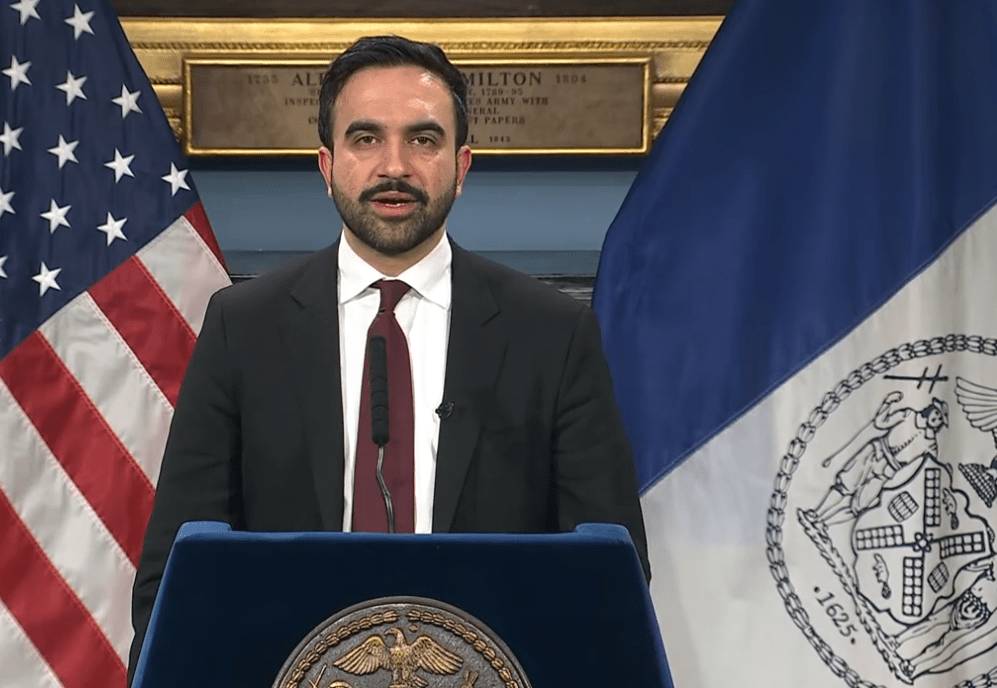
Image courtesy of the Mayor’s office via YouTube
NYC Mayor Zohran Mamdani released the Fiscal Year (FY) 2027 Preliminary Budget on Tuesday, Feb. 17, outlining the scope of what was described as a fiscal crisis he said he inherited from the prior administration. The mayor presented two paths forward to balance the budget (a legal requirement): raise revenue from the wealthiest New Yorkers and most profitable corporations and end the drain of City resources to the State, or have working and middle-class New Yorkers fund the gap.
“There are two paths to bridge the city’s inherited budget gap,” the mayor said. “The first path is the most sustainable and fairest: raising taxes on the wealthiest and corporations; and ending the drain by fixing the imbalance between what the City provides the State and what we receive in return.” He said the City has long contributed more, financially, to New York State government that what it has received in return.
He continued, “If we do not go down the first path, the City will be forced to go down a second, more harmful path of property taxes and raiding our reserves, weakening our long-term fiscal footing and placing the onus for resolving this crisis on the backs of working and middle-class New Yorkers. We do not want to have to turn to such drastic measures to balance our budget. But, faced with no other choice, we will be forced to.”
Mamdani said that upon taking office, his administration identified a pattern of underbudgeted essential services. He said these included rental assistance, shelter operations and special education that widened projected gaps stated in the November 2025 Financial Plan Update to roughly $12 billion across FY 2026 and FY 2027.
He said to restore transparency and stability, his Administration launched aggressive new savings initiatives, maximized the use of in-year reserves and incorporated updated revenues. The mayor said that through Executive Order 12, he is requiring every city agency to designate a Chief Savings Officer (CSO) to identify recurring efficiencies, and these savings initiatives are projected to save $1.77 billion across the two fiscal years.
Mamdani said that after applying savings, revenue adjustments driven by an upward revision of $7.3 billion in tax revenue, and State support, including $1.5 billion in from New York Gov. Kathy Hochul, and an additional $97 million in Foundation Aid, the City faced a remaining two-year gap of $5.4 billion. He said the Mamdani administration’s preferred solution is recurring revenue: increasing personal income taxes on New Yorkers earning more than $1 million annually, and raising taxes on the most profitable corporations, while recalibrating what he described as the City’s “long-imbalanced fiscal relationship with the State.“
Absent new revenue authority, he said the City will be forced to use the only tools currently available to increase revenue and fill the gap: property taxes and the use of reserves. He said the $127 billion FY 2027 Preliminary Budget assumes a 9.5 percent property tax rate increase, generating $3.7 billion in FY 2027. The mayor said the City also applied $980 million from the city’s Rainy Day Reserve Fund in FY 2026 and $229 million from the Retiree Health Benefit Trust in FY 2027 to balance the budget, as legally required.
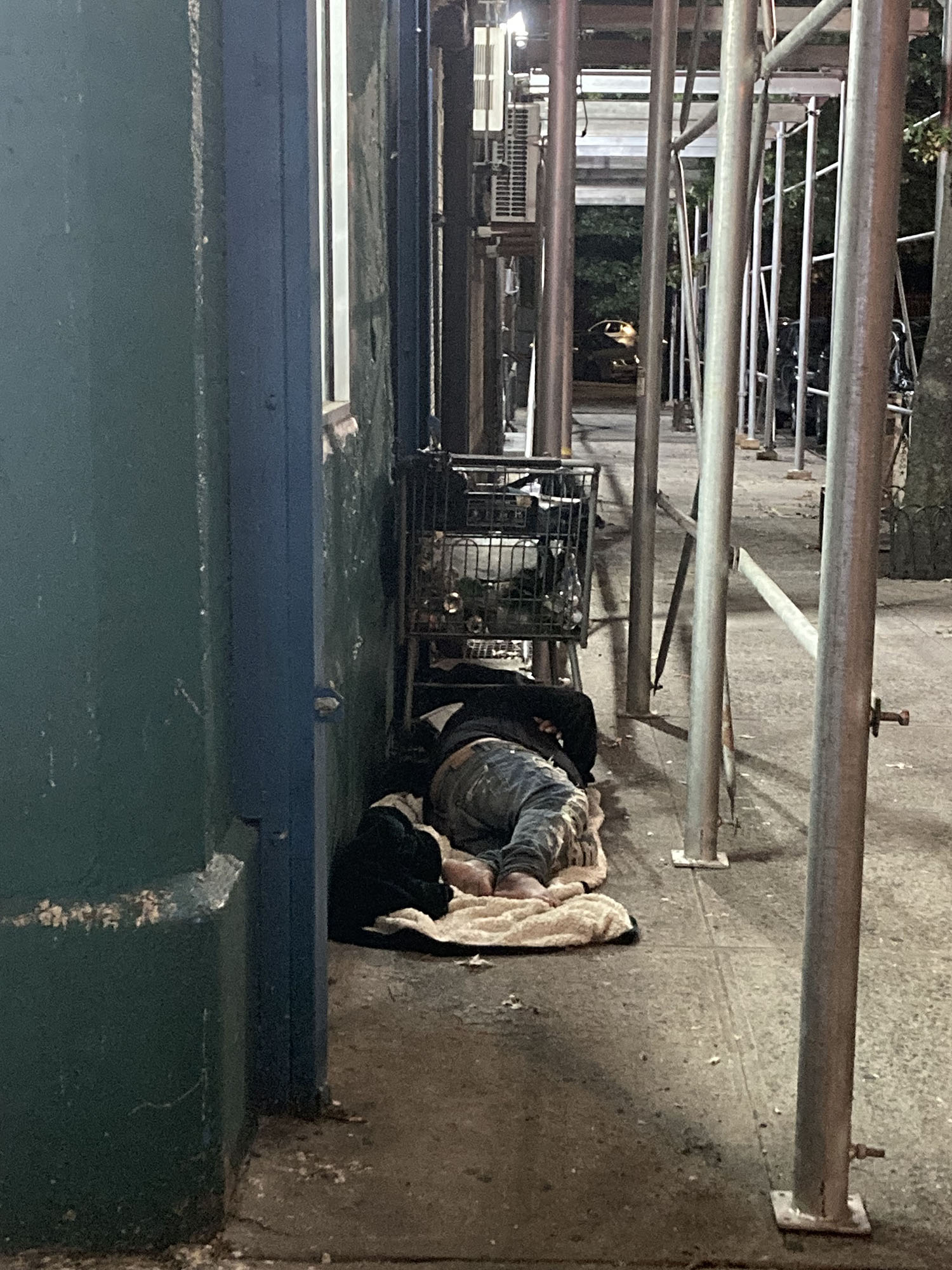
Photo Caption Photo by Síle Moloney
Of the $14 billion in city-funded agency expense changes across the two fiscal years, Mamdani said the vast majority fills underbudgeted needs. He said roughly 4 percent, $576 million, supports targeted investments. He said these include $100 million in FY 2026 for snow removal; $5 million in FY 2026 for warming centers and shelter connections for homeless New Yorkers; $11.9 million in FY 2027 for new Street Health Outreach & Wellness (SHOW) mobile units and a new Bridge to Home site for people living with severe mental illness.
He said they also include $5.3 million in FY 2026 and $38 million in FY27 for 200 new attorneys and 100 support staff to reduce tort liability and advance affordability efforts; and more than tripling baseline funding for HRA’s Community Food Connection program with an addition of $54 million in FY 2027.
He said the Preliminary Five-Year Capital Plan totals $113 billion in all-funds and includes $662 million in FY 2027 to modernize and preserve more than 3,200 affordable housing units and $48.2 million starting in FY 2027 to fully fund the renovation and expansion of Bellevue’s Adult Comprehensive Psychiatric Emergency Program.
For more recent coverage of the mayor, click here.

admin
Welcome to the Norwood News, a bi-weekly community newspaper that primarily serves the northwest Bronx communities of Norwood, Bedford Park, Fordham and University Heights. Through our Breaking Bronx blog, we focus on news and information for those neighborhoods, but aim to cover as much Bronx-related news as possible. Founded in 1988 by Mosholu Preservation Corporation, a not-for-profit affiliate of Montefiore Medical Center, the Norwood News began as a monthly and grew to a bi-weekly in 1994. In September 2003 the paper expanded to cover University Heights and now covers all the neighborhoods of Community District 7. The Norwood News exists to foster communication among citizens and organizations and to be a tool for neighborhood development efforts. The Norwood News runs the Bronx Youth Journalism Heard, a journalism training program for Bronx high school students. As you navigate this website, please let us know if you discover any glitches or if you have any suggestions. We’d love to hear from you. You can send e-mails to norwoodnews@norwoodnews.org or call us anytime (718) 324-4998.