



Photo by Síle Moloney
Fourteen years later, the Norwood News began documenting our communities and the people and institutions working to rebuild the Northwest Bronx. For nearly four decades, the paper has chronicled NWBCCC’s campaigns, victories, challenges, and evolution alongside the larger story of the Northwest Bronx. Much has changed since those early days, including our organization, now known as Our Bronx, but the foundation of the work has remained the same.
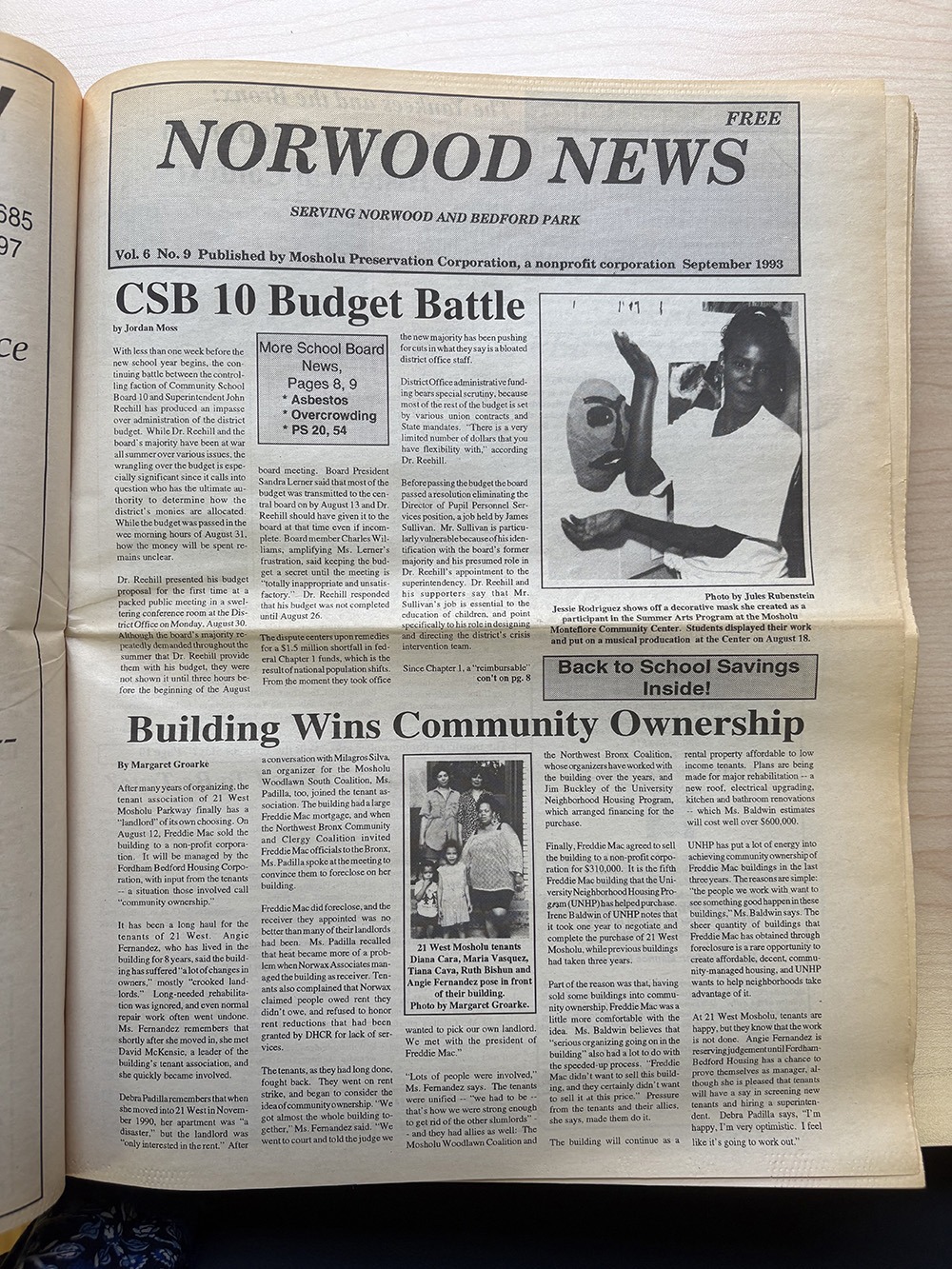
Photo by Síle Moloney
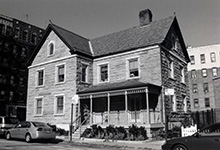
In our early years, NWBCCC’s organizing was deeply neighborhood-based. Residents formed local committees to identify the most urgent issues on their blocks and develop solutions together. Those committees addressed immediate problems while also developing community leaders. Neighbors learned how to organize with each other, negotiate with public officials, understand how decisions were made and build campaigns that produced real improvements.
That organizing also created institutions that remain important to The Bronx today. NWBCCC helped establish organizations such as Fordham-Bedford Housing Corporation (FBHC), Mount Hope Housing Company, University Neighborhood Housing Program (UNHP), creating lasting infrastructure to preserve affordable housing and strengthen neighborhoods. The organization also joined campaigns that helped win the federal Community Reinvestment Act, and, in later decades, worked in coalitions that advanced New York City’s Student Safety Act, New York State’s Housing Stability and Tenant Protection Act, and the Fair Medical Debt Reporting Act.
As conditions in The Bronx changed, so did the issues residents brought forward. Housing remained central, but our organizing expanded to include youth leadership, education, health equity, environmental justice, and community and economic development. We increasingly understood that these issues are connected and that addressing them required looking beyond individual problems to the systems that shaped people’s lives.
By the early 2010s, members and staff were asking another question. After decades of organizing victories, improving housing conditions, stopping harmful development, and winning important public policies, why were so many Bronx residents still struggling economically while significant new investment and wealth were coming into the borough?
That question helped shift the organization’s thinking about economic development. In 2012, NWBCCC co-founded the Bronx Cooperative Development Initiative (BCDI), with organizations from across the borough to explore a different model. The effort was informed by years of organizing around projects such as the Kingsbridge Armory and Sheridan Expressway, where communities spent an enormous amount of time and energy fighting proposals that did not reflect their priorities.
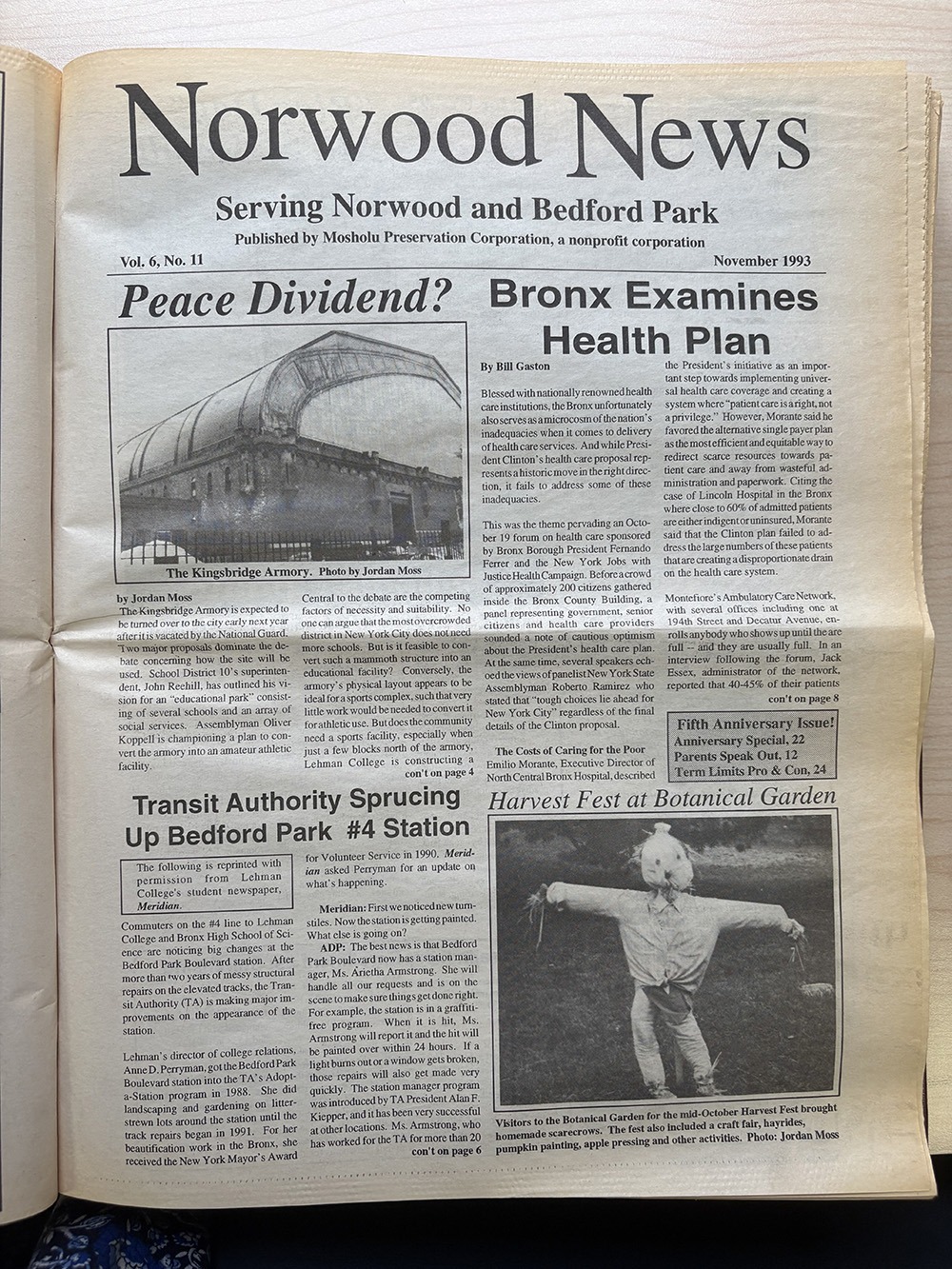
Photo by Síle Moloney
We began asking not only how to stop harmful development, but what community-led development should look like and who should own, govern, and benefit from growth in the Bronx. That same year, NWBCCC began a year-long process with staff, board members, and community leaders focused on economic democracy. In 2013, the organization formally centered racial justice and economic democracy in its mission, leading to a deeper focus on community ownership, shared governance, and long-term systems change.
The distinction between “fighting back” and “fighting forward” became important to our organizing. Fighting against harmful policies, negligent landlords, and inequitable development remained necessary, but communities also needed to build the capacity to create the alternatives our communities wanted.
That approach has shaped much of the organization’s work over the past decade. We founded the Bronx Community Land Trust and began developing pathways for tenants to expand organizing around housing conditions toward collective ownership. We’ve organized for policies such as the Community Opportunity to Purchase Act and Tenant Opportunity to Purchase Act, and brought organizations and institutions together to develop a longer-term economic vision for The Bronx.
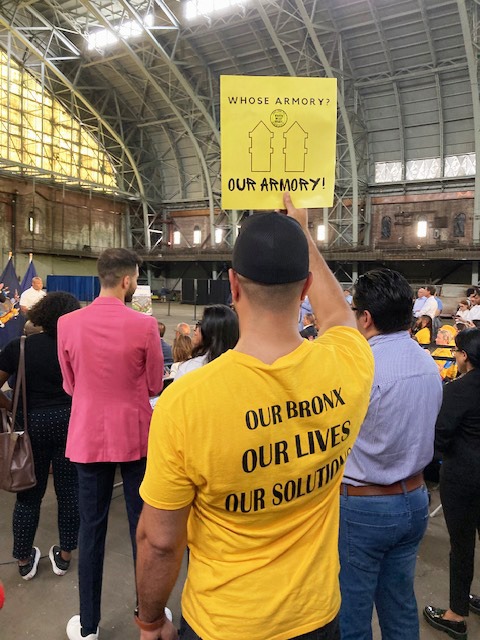
More recently, we returned to the Kingsbridge Armory. For decades, the Armory represented the question of who gets to decide what development looks like in our communities. In the most recent redevelopment process, thousands of residents participated in developing a community vision before a project was selected.
That organizing helped secure a legally binding community benefits agreement with commitments around family-sustaining jobs, local hire, community oversight, and long-term community benefits. Our Bronx also secured a direct community ownership stake in the project and will own and govern community and manufacturing space within the Armory.
For us, that represents the evolution of the same organizing approach that began decades ago. Residents come together around the conditions they face, develop leadership and a shared analysis, organize for change, and build the institutions needed to sustain that change. Increasingly, that has meant creating opportunities for Bronx residents to own assets and have greater decision-making power over their lives.
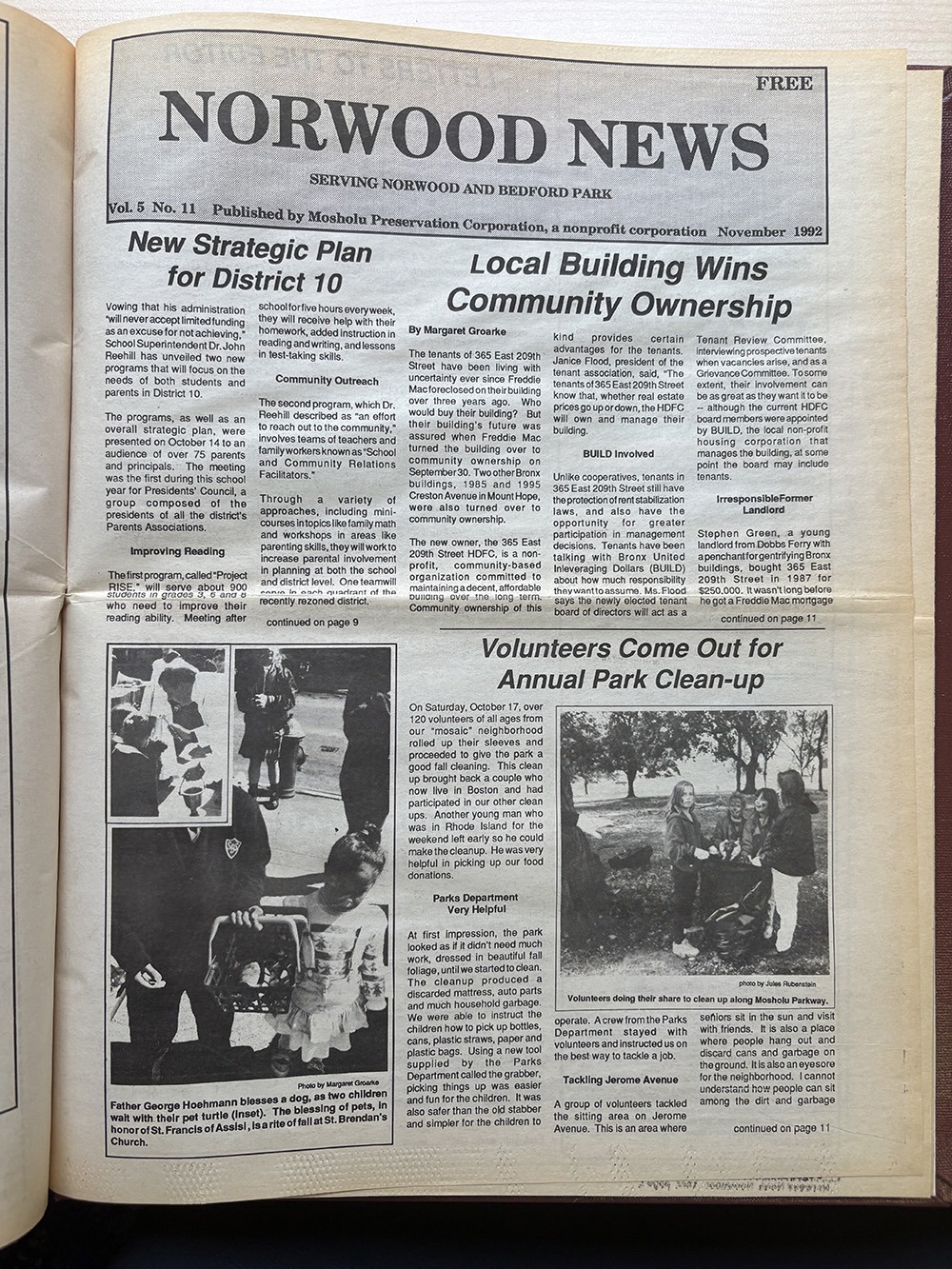
Photo by Síle Moloney
Our recent merger with BCDI and transition to the name Our Bronx reflects another stage in that evolution. Our roots remain in the Northwest Bronx, but many of the forces affecting our communities operate across neighborhoods and across the borough. We are working to connect organizing, planning, and economic development at a larger scale, in coordination with organizations and institutions across The Bronx.
Despite these changes, much of what defined NWBCCC in 1974 remains central today. We continue to believe that people directly affected by an issue bring expertise to solving it. We continue to invest in leadership development and coalition-building, bringing together groups who may not have traditionally worked together. And we continue to create new approaches and institutions when existing ones do not meet our communities’ needs.
The Norwood News has witnessed and documented much of that history. Its reporters have covered community meetings, hearings, neighborhood events, and moments that might otherwise have gone undocumented. The newspaper has helped residents understand what was happening in their neighborhoods, follow important public decisions, and hear from people working to change their communities. That makes the paper’s closing a real loss for the community.
The Bronx of 2026 is not The Bronx of 1974. Some of the challenges have changed, from disinvestment to displacement, an affordability crisis, and fundamental questions about who will own and benefit from the borough’s future. Yet the need for residents to organize, develop leadership, build coalitions, and have a meaningful role in shaping their communities remains.
For nearly 40 years, the Norwood News helped document that work and the people behind it. We are grateful that it did.
Sandra Lobo is executive director of the nonprofit, Our Bronx.
To read some but not all of the history of the Kingsbridge Armory over the years, click here, here, here, here, here, here, here, here, here, here, here, here, here, here, here, here, here, here, here, here, here, here, here, here, here, here, here, here, here, here, here, here, here, here, here, here, here, here, here, here, here, here, here, here, here, here, here, here, here, here, here, here, here, here, here, here, here, here, here, here, here, here, here, here, here, here, here. here, here, here, here, here, here, here, here, here, here, here, here, here, here, here, here, here, here, here, here, here, here, here, here, here, here, here, here, here, here, here, here, here, here, here, here, here, here, here, here, here, here, here, here, here here, here, here, here, here and here. (Stories on the armory prior to circa 2005 are archived in print.)

admin
Welcome to the Norwood News, a bi-weekly community newspaper that primarily serves the northwest Bronx communities of Norwood, Bedford Park, Fordham and University Heights. Through our Breaking Bronx blog, we focus on news and information for those neighborhoods, but aim to cover as much Bronx-related news as possible. Founded in 1988 by Mosholu Preservation Corporation, a not-for-profit affiliate of Montefiore Medical Center, the Norwood News began as a monthly and grew to a bi-weekly in 1994. In September 2003 the paper expanded to cover University Heights and now covers all the neighborhoods of Community District 7. The Norwood News exists to foster communication among citizens and organizations and to be a tool for neighborhood development efforts. The Norwood News runs the Bronx Youth Journalism Heard, a journalism training program for Bronx high school students. As you navigate this website, please let us know if you discover any glitches or if you have any suggestions. We’d love to hear from you. You can send e-mails to norwoodnews@norwoodnews.org or call us anytime (718) 324-4998.