



Photo by Síle Moloney
This week, we asked readers their opinion on New York City Mayor Zohran Mamdani’s veto, on First Amendment grounds, as reported, of City Council Bill Intro 0175B, sponsored by City Councilman Eric Dinowitz (C.D. 11), that would require the NYPD to establish a plan containing considerations on whether, when, and to what extent security perimeters (buffer zones) could be established outside educational facilities.
A similar bill, Intro 0001B, pertaining to protest planning around houses of worship was not vetoed by the mayor. In the context of his veto, as reported, the mayor had said in part, “The problem is how widely this bill defines an educational institution and the constitutional concerns it raises regarding New Yorkers’ fundamental right to protest. As the bill is written, everywhere from universities to museums to teaching hospitals could face restrictions.”
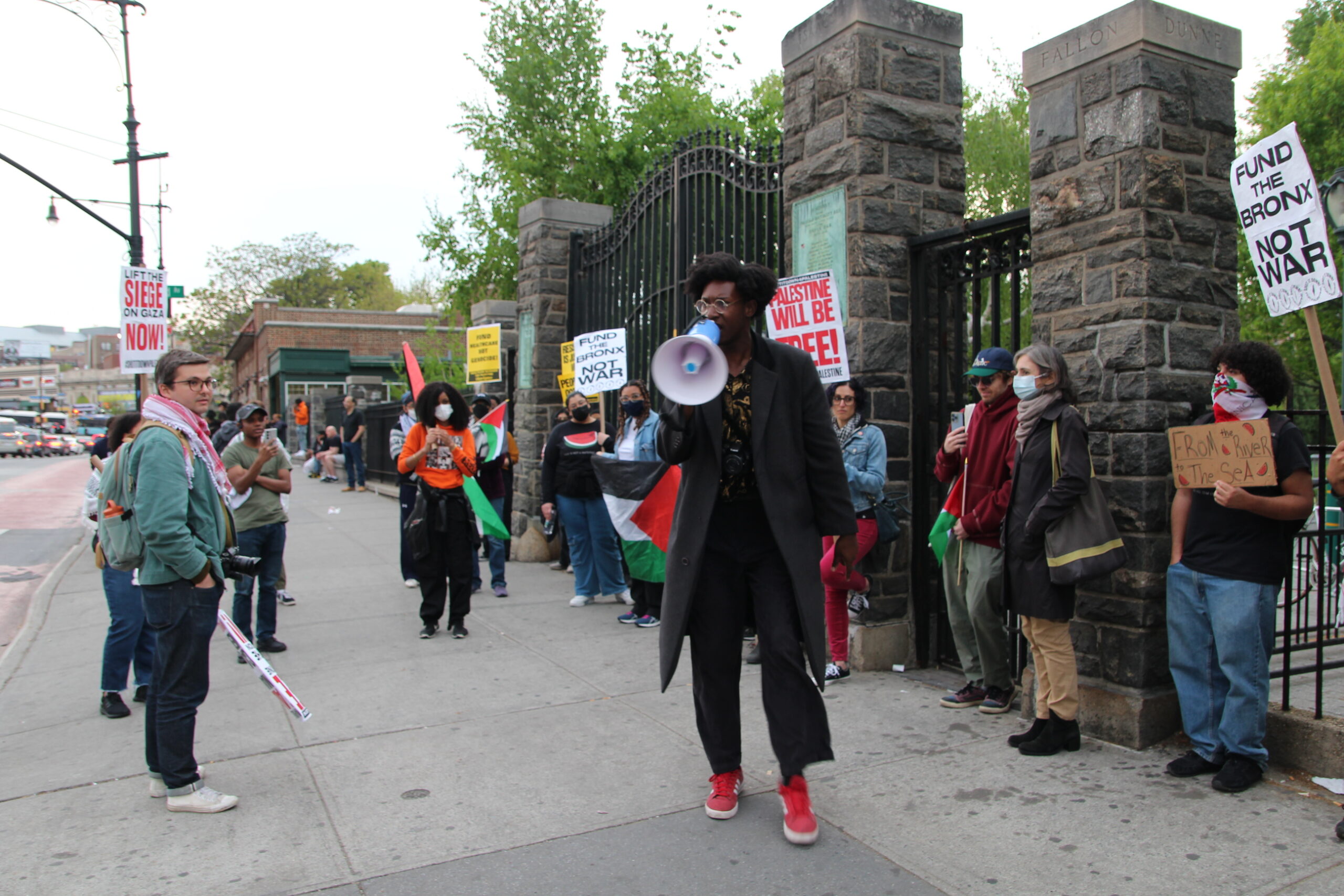
Norwood News had reported on at least one student protest outside Fordham University in May 2024 in The Bronx in relation to the war in Gaza. In April 2025, we reported that four Fordham University students had their student visas revoked. Meanwhile, the councilman and City Council Speaker Julie Menin (C.D. 5), both of whom are Jewish, had already stressed that the purpose of the bill was not to infringe on First Amendment rights but to ensure the safety of students.
Since then, one Bronx resident commented that some community board and other public meetings, often attended by elected officials, are frequently held at educational facilities in The Bronx and questioned whether the bill, as written prior to being vetoed, would have impacted upon the right to protest at such meetings. Norwood News asked the city council and the councilman’s office for comment on this point.
A representative for the speaker’s office responded, reiterating that the bill wouldn’t restrict protests at those meetings as it doesn’t restrict protests at all, is speech content neutral, and mainly requires the NYPD be more transparent about their activities, and publicly post a plan of how they propose to respond to protests at educational facilities.
Norwood News was advised the speaker’s office that public forum doctrine, among other factors, dictates what is constitutional and what is not when it comes to free speech and other First Amendment rights, and that the city council does not generally prescribe any restrictions on protest activity. We were further advised that Intro 0175B relates to circumstances in which there is intimidation, physical injury, interference, physical obstruction or harassment at educational facilities.
Norwood News was also advised by the speaker’s office that the NYPD would typically make any determinations around any such harassment, or other as described above, at such locations, and that their determination in managing protests could be slightly different based on whether there are children present or not, for example.
We were also advised that the NYPD/police commissioner were consulted, and gave testimony, on the draft bill 0175B-2026 and we were referred to the NYPD for further comment on our request. Norwood News did reach out to the NYPD directly. We did not receive an immediate response but will share any feedback we receive.
For further context around First Amendment rights, during the COVID-19 pandemic in November 2021, anti-vax protestors, some bearing swastikas and Stars of David, showed up to protest at the office and later at the home of Assemblyman Jeffrey Dinowitz (A.D. 81), the councilman’s father, over his pro-vaccine stance on COVID-19 vaccine requirements.
The assemblyman said at the time, “The display of swastikas and yellow Stars of David outside my office today is repugnant and offensive. People are perfectly free to express their opinion on vaccines or any issue, but to openly display Nazi symbols outside the office of a Jewish legislator is despicable.”
Norwood News asked the NYPD at that time, in the context of First Amendment rights, whether the display of swastikas and yellow Stars of David on signs constituted hate speech. We were advised that the NYPD makes clear on its website how hate crimes are defined.
A website extract clarifies that under the law, a hate crime is a criminal act that is motivated in whole or substantial part by the perceived identity of the victim. For example, when a person calls another person an insulting name, it is just a name and not a crime, even if the name is hateful and offensive. This kind of name calling is generally protected as free speech. In contrast, if someone calls a person a hateful name because of their identity alone and also assaults them, the assault is a crime, and the motivation makes the act a hate crime as well.
According to the extract, the hate crime designation can also apply to other crimes, such as criminal mischief and graffiti, like painting racial slurs or swastikas on public or private property or the desecration of cemeteries associated with particular religious or racial groups. Free speech protections end with the committing of a criminal act, and hateful speech or writing in conjunction with a crime, is a hate crime.
For more color on the rationale of the mayor, who is Muslim, for vetoing the bill, and on the initial reaction from the councilman in the wake of the veto, read our initial story here.
The councilman also reiterated his point of view on the veto in a video message, referencing his almost 14 years as a public school special education teacher. He said the veto, which was designed to provide safe access for students during school, was “a betrayal of New York City’s promise of a harassment-free education,” and added, “It’s important that you understand what this bill is and what it isn’t.”
In reference to the mayor’s comments, when vetoing the bill, on the civil rights movement of the 1960s, Dinowitz said, “The mayor is invoking the civil rights movement yet omitting one of its fundamental pillars, equal access to education. free of intimidation, interference and obstruction. When education is inhibited by mobs of people, the government has the obligation to act.”
Referring to the mayor’s comments on the fact that the city’s history is “written by those who refuse to stay silent,” Dinowitz said, “History is also written in the classrooms, where students learn who they are and what they can become.” He added, “Education, itself, is one of the purest forms of protest because every lesson learned is an act of hope, progress, and possibility.”
Referring to the mayor’s comments on “the right to worship being as sacred as the right to protest,” the councilman said, “For so many children, school is a second home. I’ve seen it firsthand during my time in our public school classrooms, right here in our great city. We must protect the sanctity of our classrooms with the same seriousness as we protect the sanctity of any house of worship.”
In reference to the mayor’s remarks that Intro 0175B-2026 (relating to educational facilities) was meaningfully different from Intro 0001-2026 (relating to religious institutions), the councilman said, “These bills are not meaningfully different. In fact, they are almost identical. They provide the same legal framework, the same protections, the same requirement for public input, all with the same language and all with the same goal to protect equal access to schools and houses of worship.”
In reference to the mayor’s remarks, where he gave examples of a worker protesting the U.S Department of Immigration & Customs Enforcement (ICE), a college student demanding their school divest from fossil fuels, or students demonstrating in support of Palestinian rights, Dinowitz said, “This is a content neutral bill. Intimidation, interference or obstruction is unacceptable regardless of viewpoints. The issue is not the message. The issue is students’ ability to safely access schools.”
In reference to the mayor’s remarks, where he referred to Intro 0001B-2026, wherein the NYPD is required to write down its existing practices around how it will handle protests at houses of worship, the councilman said in part, “0175B calls for the same. In fact, this bill regulates the NYPD. It does not expand powers or give new authority to arrest people.”
He added. “Our students deserve safety. I encourage you to read the bill. It creates new pathways for accountability and transparency, two things that this veto is sorely lacking.”
According to the British Medical Journal, the Israeli government has reportedly acknowledged that at least 70,000 Gazans have been killed in Israeli attacks since 7 October 2023, but experts have warned that the true number of deaths is likely to be much higher.
The Journal reported that several sources, including the Times of Israel and the Guardian, reported that an Israeli security official anonymously briefed journalists in early February/late January 2026 and accepted the Gazan Ministry of Health’s (MoH) estimated death toll of more than 70,000 Gazans. Meanwhile, the Journal also reported that more than 171,000 Palestinians have been injured, according to the MoH.
According to the U.S. Congress, more than 1,200 Israelis and foreign nationals were killed during the initial Hamas attack on October 7, 2023. Additionally, over 346 Israeli soldiers died in fighting during the subsequent ground operations in Gaza as of October 2024, with total fatalities including those killed in the attack and during the war estimated at over 1,500.
According to multiple sources, of the 251 Jewish hostages originally taken during the October 7, 2023 attacks, some were killed in captivity, while others were released at various stages. As part of a peace deal brokered by the Trump administration in October 2025, the remaining living Israeli hostages, the bodies of the Israeli hostages killed in captivity, and various other Palestinian hostages who had been detained by the Israeli government over several years were repatriated to their respective families.
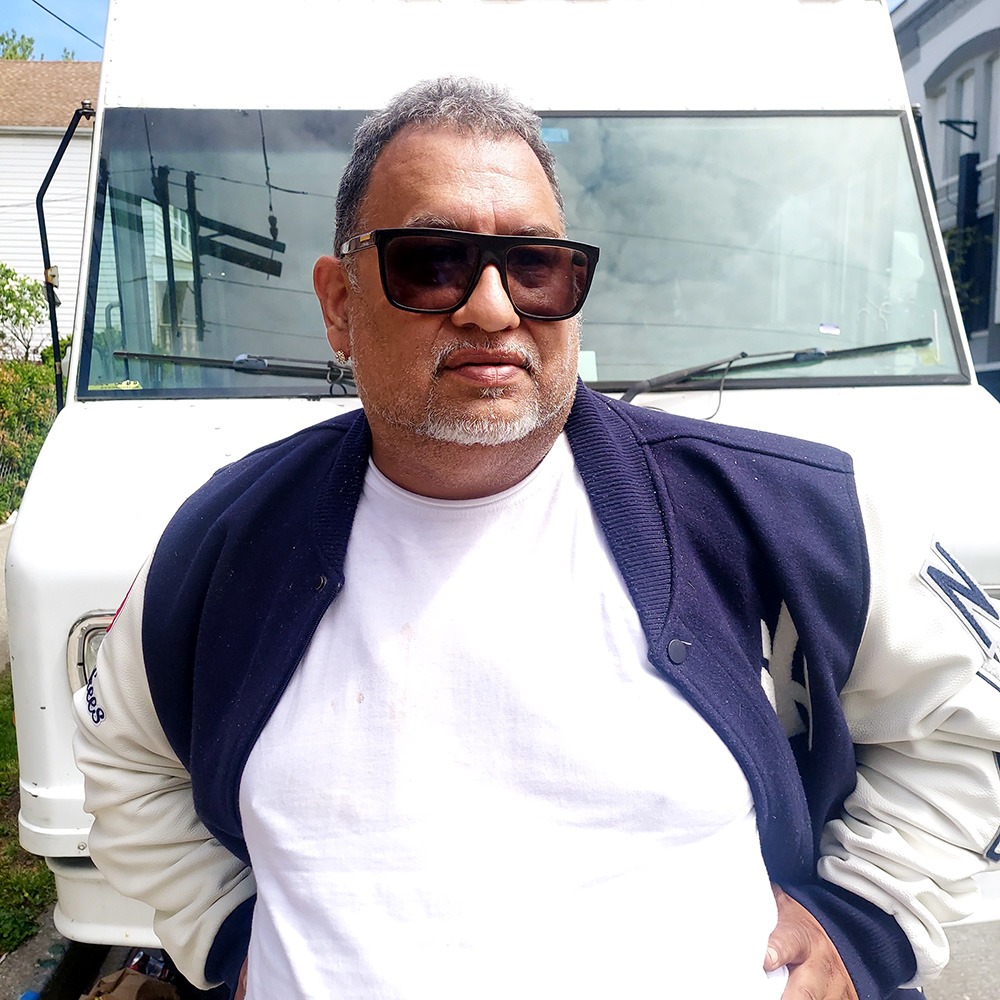
Photo by David Greene
“I think it’s ‘ludicrous,’ to quote Mike Tyson. Most protests in this country have started and gravitate around colleges and universities to begin with and that starts all the problems, so if you really want to put an end to it, that’s where you need to start. That’s not where you need to finish. As far as children are concerned, I’ve seen this happen time and time again, where teachers are bringing children outside and have them join protests without the parents even knowing what was going on. I have four children and they’re all still going to school. There should never be a protest outside of a school. I don’t understand how some of these people are voting.”
John Andujar,
Williamsbridge
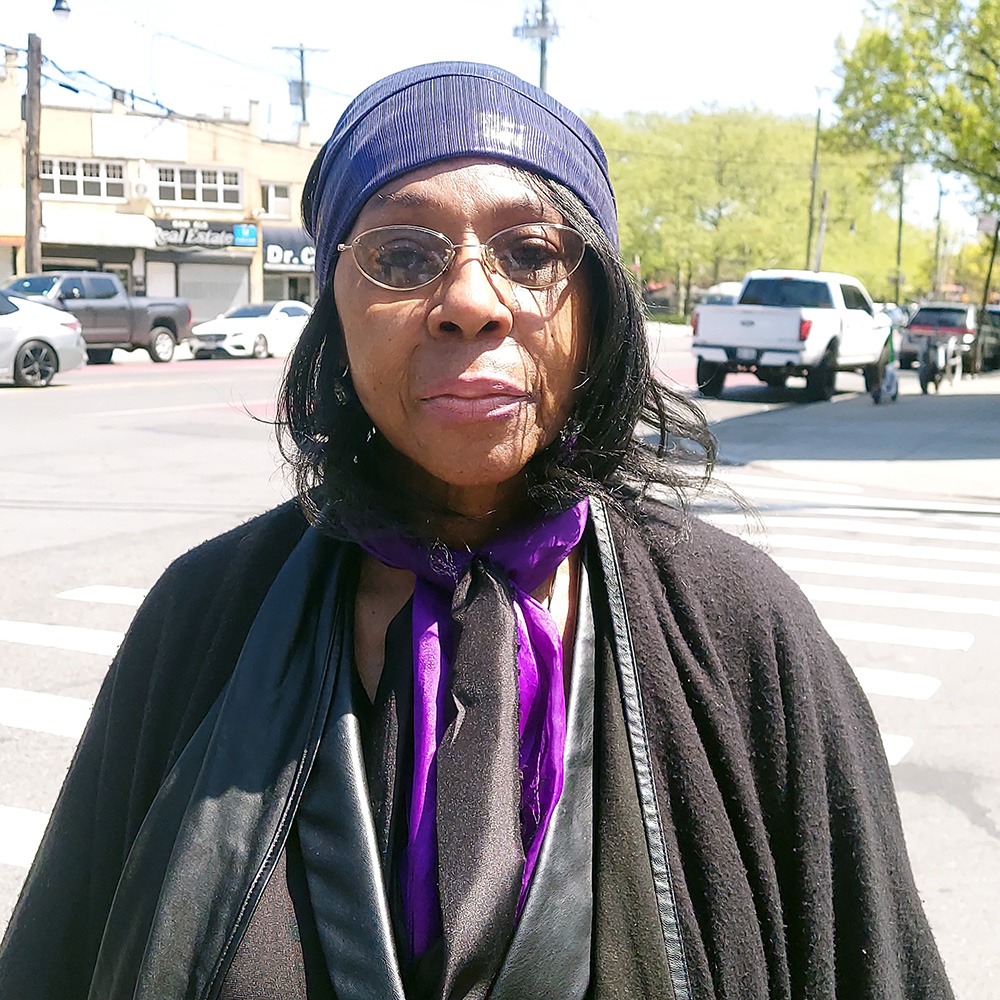
Photo by David Greene
“I feel we don’t need it, because the more protests that we have could help stop this violent crime we are experiencing. I just believe that it’s alright if protesters come into the church; we go all over. As long as they’re not doing anything to disturb the church, because we have enough people that if they came in, we could monitor and make sure who they are before we allow them to come in.”
Pastor Cheryl Singletary,
Mott Haven
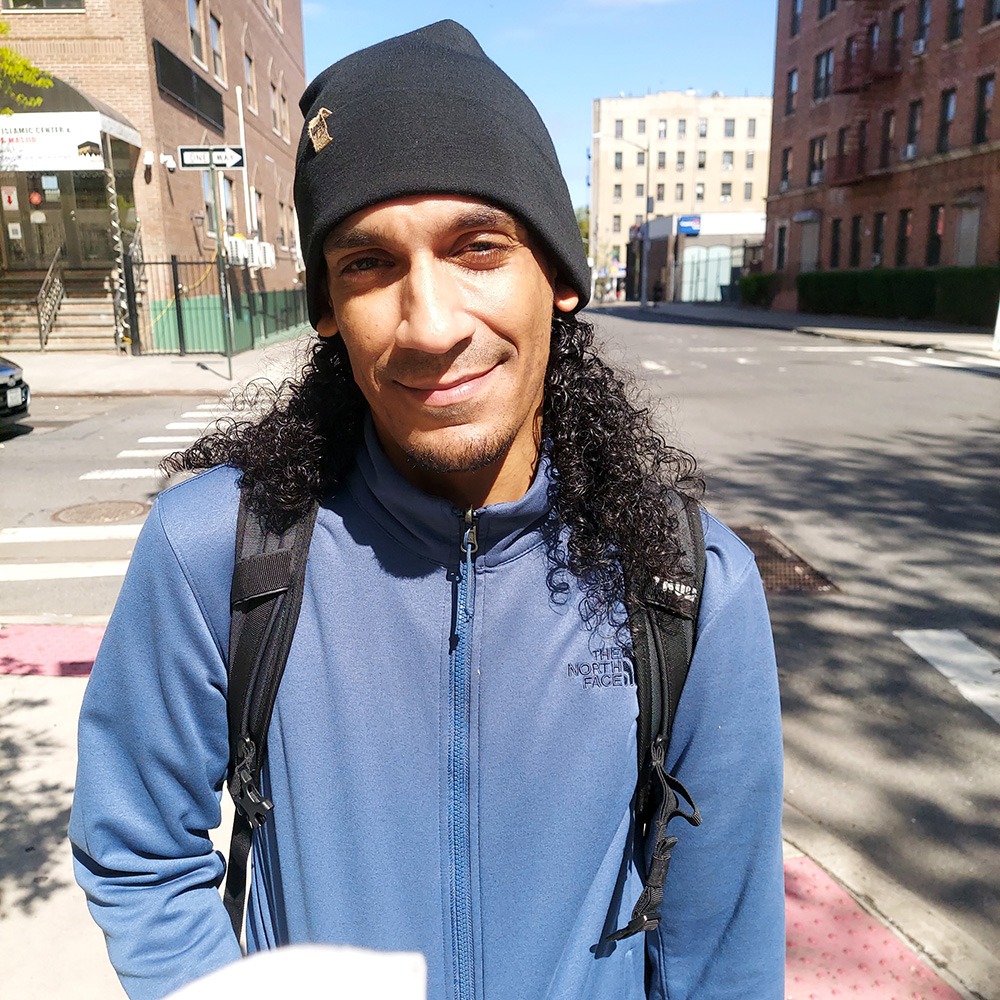
Photo by David Greene
“I think that freedom of speech is freedom of speech and it should be allowed. Why not? And you can’t stop protests at one but not the other. I understand it because I am a parent, so I wouldn’t want stuff happening in front of my kid’s school. That’s the reality of it.”
Cesar Almonte,
Norwood
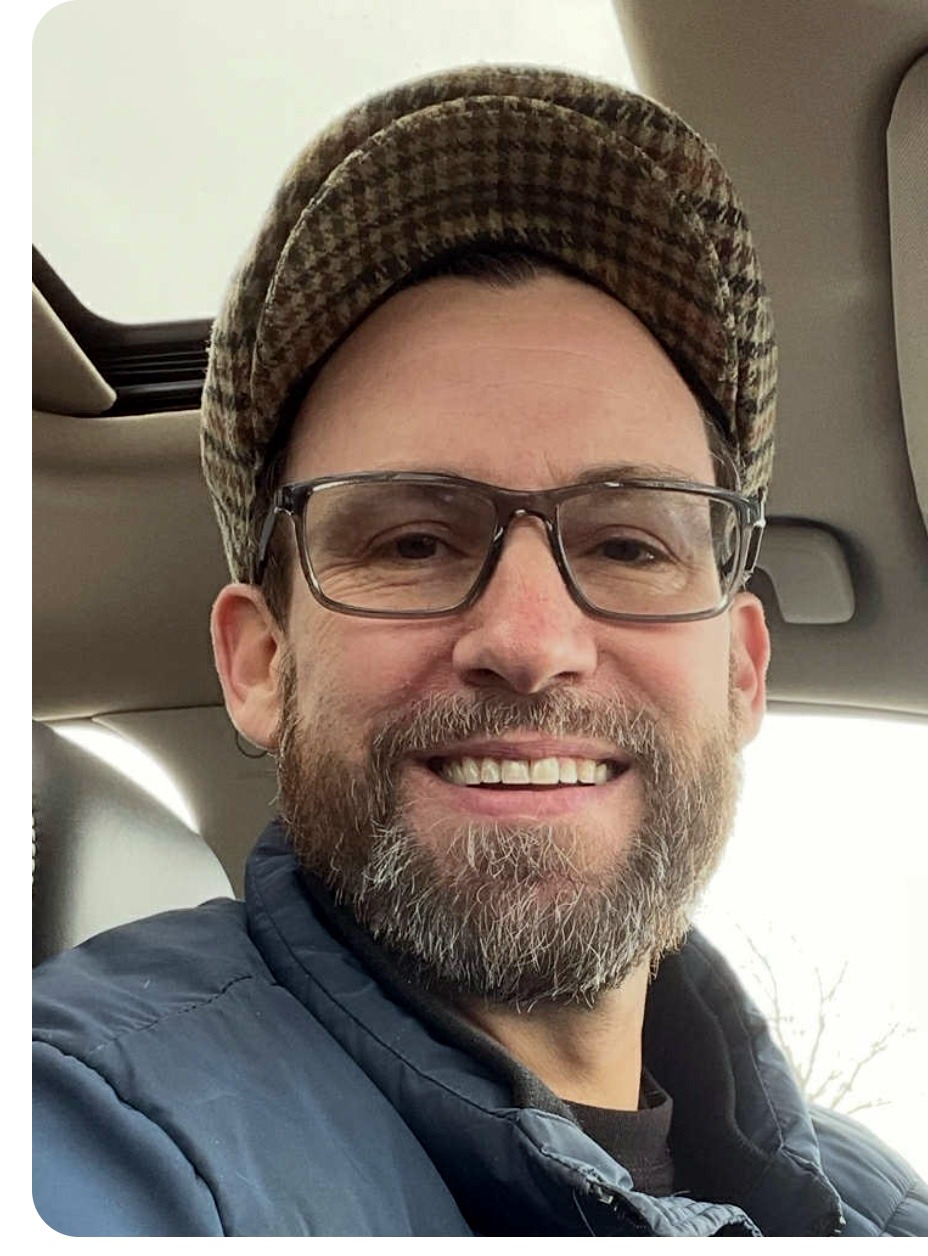
Photo courtesy of Daniel Falcone
“Religious spaces are usually not used for nationalistic purposes, so buffer zones seem reasonable. Universities though, can function as places for debate. Jewish students, for example, differ with each other about how antisemitism on campus is framed, and disagree over organizations like Hillel. Moderate Democrats present themselves as prioritizing security but should also protect speech like [NYC Mayor Zohran] Mamdani in my view.”
Daniel Falcone,
Manhattan
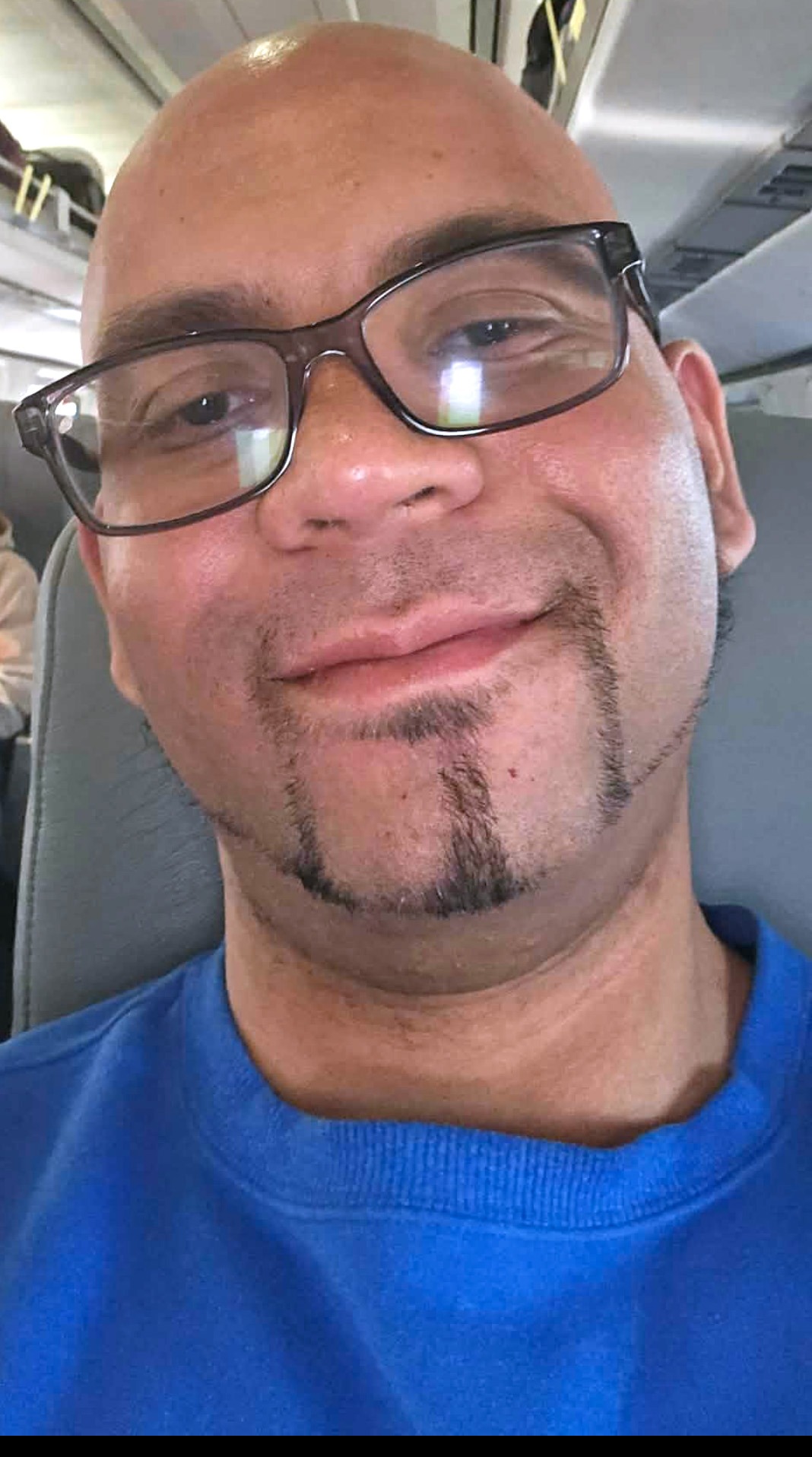
Photo courtesy of Tejada Kitedo
“I find it hilarious that first responders from across the state are now calling for their own ‘buffer zone’ after that snowball fight in February. This, from the guys who are supposed to fight crime and protect the populace and are still triggered by a snowball. It’s spring and all the snow has melted, but the snowball still lives [on] in their heads. I know many cops are conservative, which is extra funny because they’re acting like snowflakes to… literal snowflakes.”
Tejada Kitedo,
Inwood, Manhattan
Editor’s Note: In the context of a boxing fight, Mike Tyson, widely regarded as one of the greatest heavyweight boxers of all time, once reportedly said, “I could feel his muscle tissues collapse under my force. It’s ludicrous these mortals even attempt to enter my realm.”
A large snowball fight erupted in Washington Square Park in Manhattan in February 2026, during which police officers were pelted with snow by residents, reportedly causing lacerations to the faces of two officers. According to various media reports, the NYPD sought to file charges of assault.
Meanwhile, the mayor downplayed the incident as “a snowball fight that got out of hand,” and said he did not believe criminal charges were warranted. He also showed his appreciation for the NYPD’s response to the city’s snowstorm and said officers should be treated with respect.
Read some of our prior Gaza-related coverage here, here, here, here, here, here, here, here, here, here, here, and here.

admin
Welcome to the Norwood News, a bi-weekly community newspaper that primarily serves the northwest Bronx communities of Norwood, Bedford Park, Fordham and University Heights. Through our Breaking Bronx blog, we focus on news and information for those neighborhoods, but aim to cover as much Bronx-related news as possible. Founded in 1988 by Mosholu Preservation Corporation, a not-for-profit affiliate of Montefiore Medical Center, the Norwood News began as a monthly and grew to a bi-weekly in 1994. In September 2003 the paper expanded to cover University Heights and now covers all the neighborhoods of Community District 7. The Norwood News exists to foster communication among citizens and organizations and to be a tool for neighborhood development efforts. The Norwood News runs the Bronx Youth Journalism Heard, a journalism training program for Bronx high school students. As you navigate this website, please let us know if you discover any glitches or if you have any suggestions. We’d love to hear from you. You can send e-mails to norwoodnews@norwoodnews.org or call us anytime (718) 324-4998.