



Photo by Miriam Quiñones
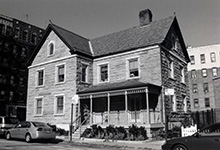
A new exhibit chronicling the history of various dance genres which were popularized in The Bronx in the 1970s and ’80s has opened at The Museum of Bronx History in the Norwood section of The Bronx.
The exhibit was marked by a formal opening night celebration at the museum, located at 3266 Bainbridge Avenue, on Saturday, Feb. 28.
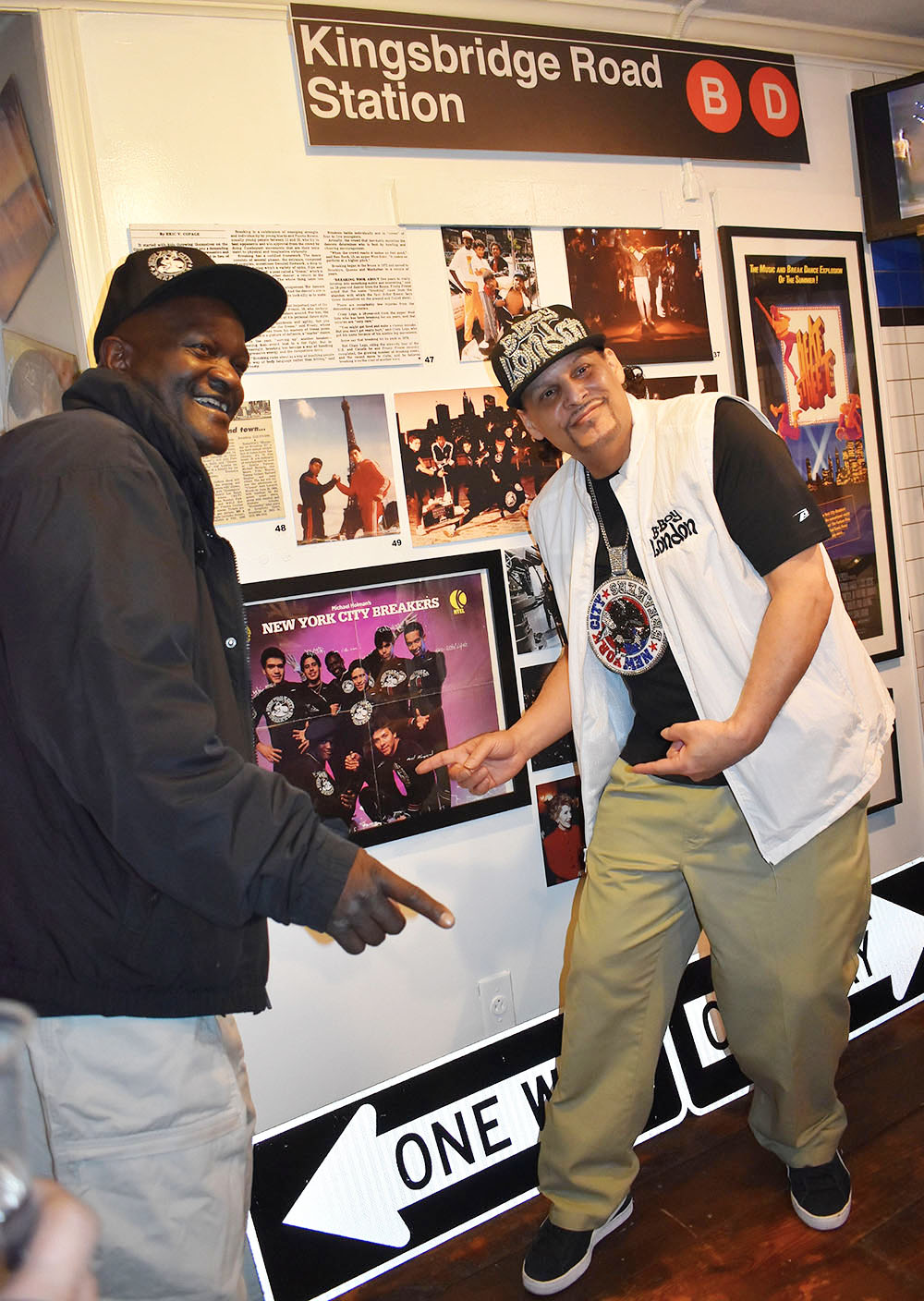
Photo by Miriam Quiñones
An extract published on the website of the Bronx County Historical Society reads, “Others have long tried to define The Bronx. Since the 1960s, most media treat our borough as a stand-in for poverty, crime, urban blight, addiction, and every other social disease that afflicts the United States. But if there’s one thing we’re not, it’s that.”
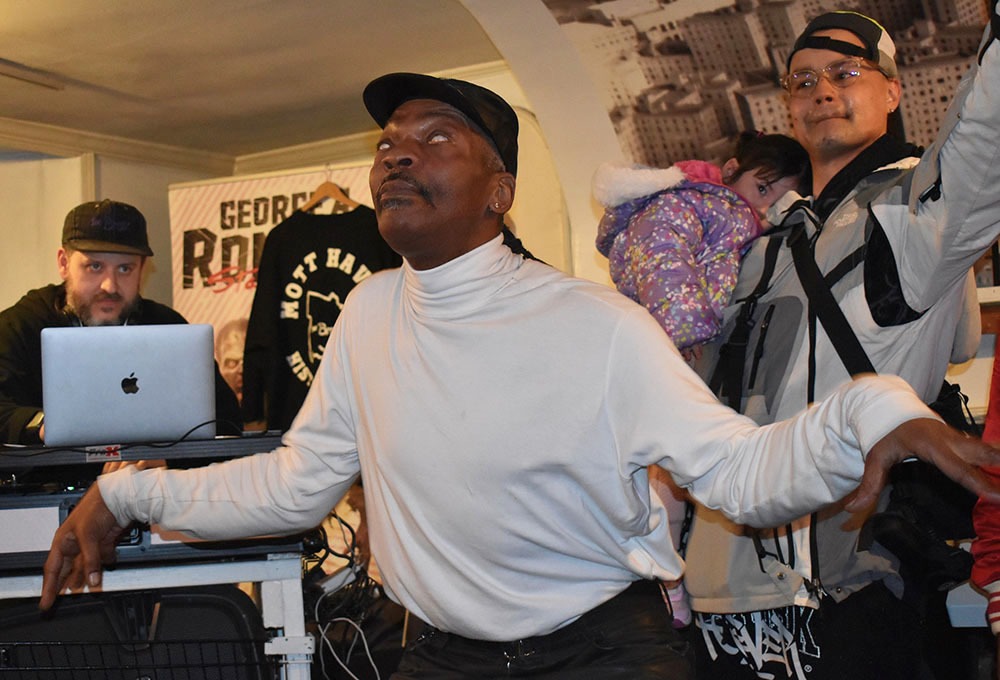
Photo by Miriam Quiñones
It’ continued, “That’s not to say we don’t live with the scars of public and private disinvestment, racist city policies, landlord neglect and arson, white flight, and the widespread destruction of our communities in the ’70s and ’80s. But we have never defined ourselves by our wounds. Bronx elders pass on remarkable stories of folks remaining in the community during these difficult years to fight back and rebuild. We are a borough of survivors, and our history overflows with daily acts of defiance and persistence by everyday working people. And yet, we are so much more than warriors of circumstance.”
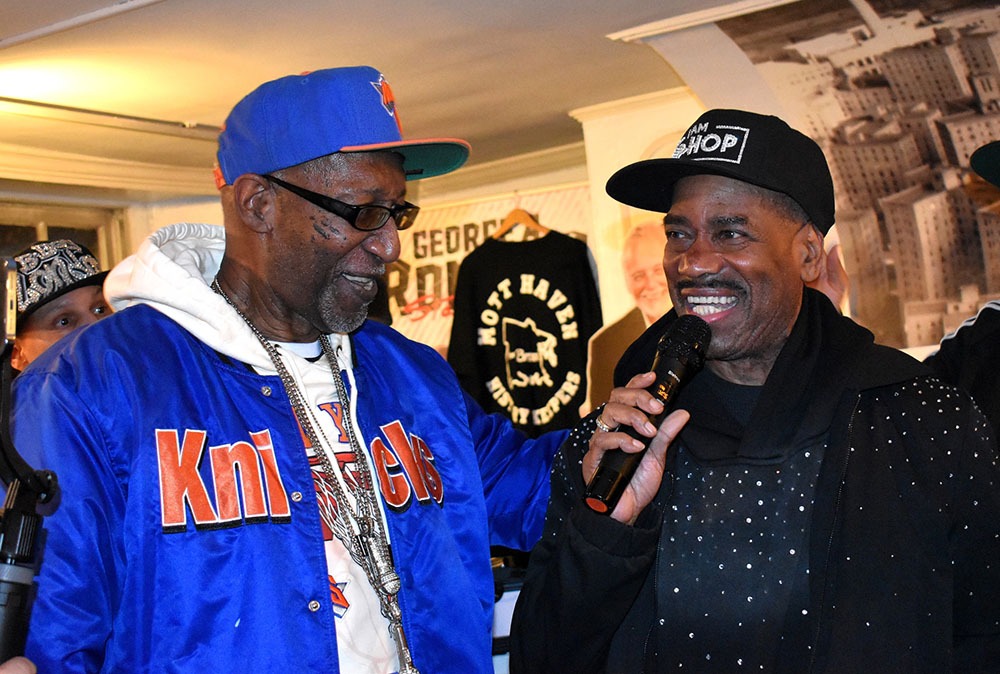
Photo by Miriam Quiñones
A further extract reads, “Above all, we create, we feel, we are moved. We are the Boogie Down. We define ourselves by our movement. We know how to boogie, how to get down, how to move ourselves and our communities . . . and the world in the process. During the same decades that older adults had to fight against all odds to survive, Bronx young people created not one, not two, but multiple new forms of dance—and entire musical cultures to go with them.”
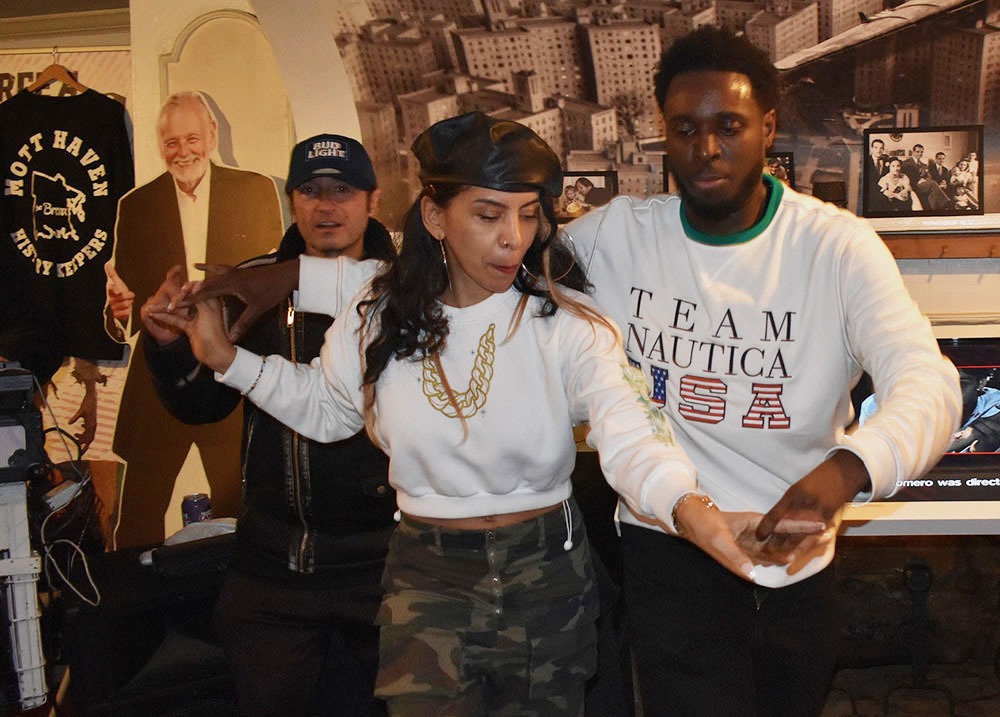
Photo by Miriam Quiñones
It continues, “Drawing on archival photographs, videos, flyers, posters, clothing, sound recordings, oral histories, memorabilia, and more, When The Bronx Moved: Histories of Dance, 1970–84 tells the stories of how Hustle, Rocking, Burning, Breakin’, and Boogying came to be in our borough. All of these dances built on contemporary and older Afro-Caribbean or African-American traditions of dance. But each created something fresh and unique—in promoting new combinations of human movement, to be sure, but also in encouraging the rapid development of electronic recorded music as an outlet of dance just as energizing as live music.”
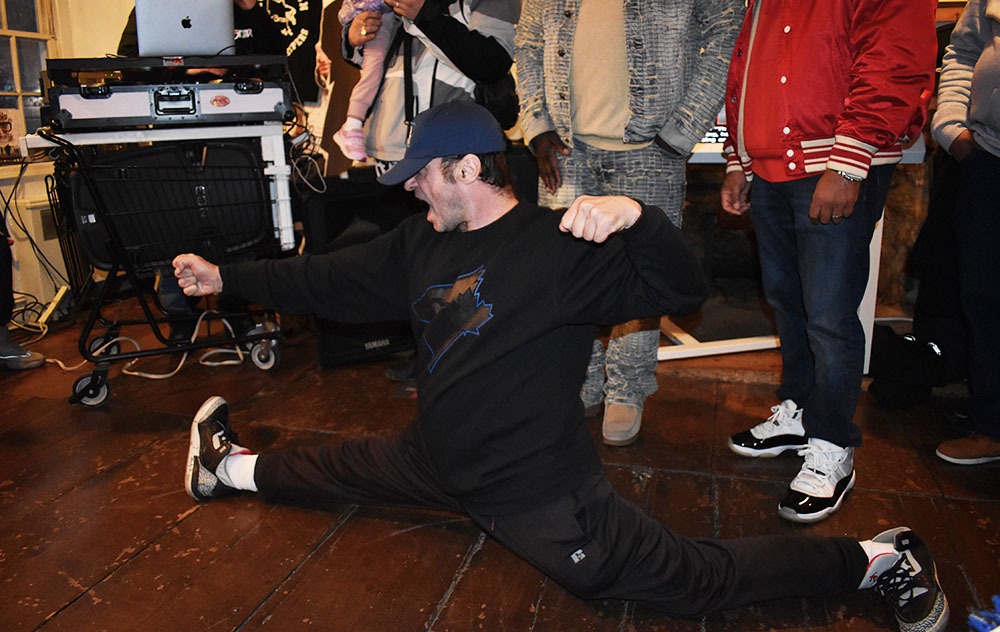
Photo by Miriam Quiñones
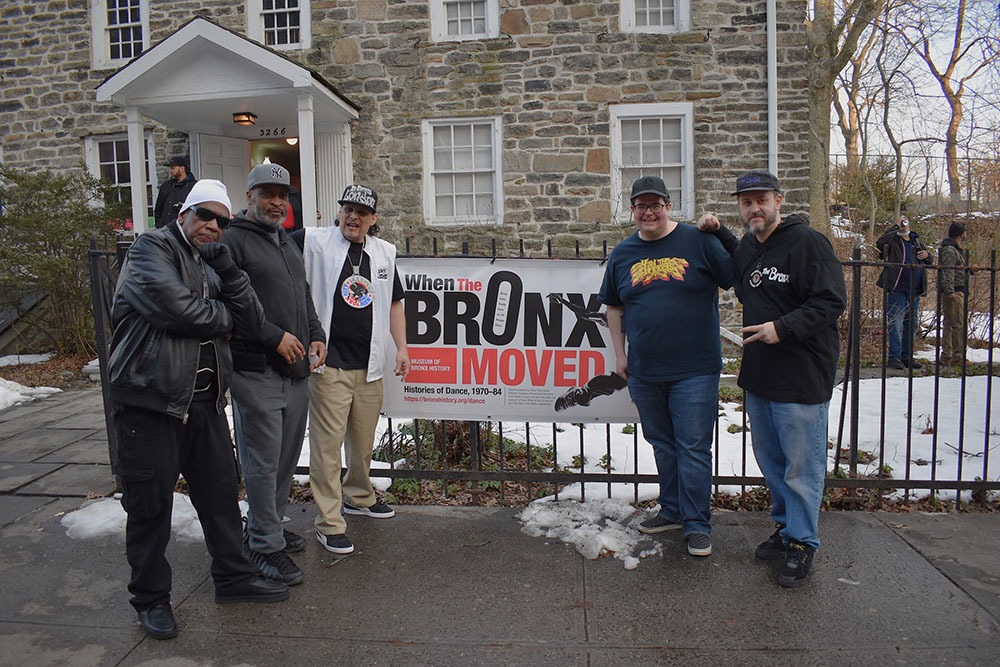
A happy group of dancers, rappers and more proudly gathered at the Museum of Bronx History on Feb. 28 to mark the occasion of the opening exhibit, with Bronx Beer Hall providing the refreshments.
“When the Bronx Moved” Exhibition Launch, Bronx County Historical Society, Bronx, Feb 2026. V1 Video by Miriam Quiñones
Two free interactive dance and history workshops both held at Soundview public library, 660 Soundview Avenue, led by BBoy London and the New York City Breakers, and sponsored by Culture Pass, one for older adults on July 24 at 11 a.m. and another for all ages on Sept.4 at 11 a.m.
“When the Bronx Moved” Exhibition Launch, Bronx County Historical Society, Bronx, Feb 2026. V2 Video by Miriam Quiñones
Despite the venue’s intimate size, the space was filled with a powerful sense of community, love and laughter, serving as a testament to the cultural heartbeat of The Bronx. The interior walls of the museum also served as a map of Bronx history, as the exhibition featured historical photography showcasing the neighborhoods that served as the backdrop for the various dance movements. They included Fordham Road, Kingsbridge Road, Tremont, Gun Hill and Longwood.
The exhibition was made possible through the collective vision of a dedicated curatorial team and honored the contributions of A1 Boy Sasa, Al Boogie, Bboy London, DJ Charlie Hustle, Steven Payne, Willie Estrada (In memory; 19XX – January 2026)
“When the Bronx Moved” Exhibition Launch, Bronx County Historical Society, Bronx, Feb 2026. V3 Video by Miriam Quiñones
A few short videos of the atmosphere on opening night are attached.
The exhibit was made possible through funding from the Office of State Sen. Gustavo Rivera (S.D. 33), and the New York State Council on the Arts, with further support from the Office of the Governor and the New York State Legislature.

admin
Welcome to the Norwood News, a bi-weekly community newspaper that primarily serves the northwest Bronx communities of Norwood, Bedford Park, Fordham and University Heights. Through our Breaking Bronx blog, we focus on news and information for those neighborhoods, but aim to cover as much Bronx-related news as possible. Founded in 1988 by Mosholu Preservation Corporation, a not-for-profit affiliate of Montefiore Medical Center, the Norwood News began as a monthly and grew to a bi-weekly in 1994. In September 2003 the paper expanded to cover University Heights and now covers all the neighborhoods of Community District 7. The Norwood News exists to foster communication among citizens and organizations and to be a tool for neighborhood development efforts. The Norwood News runs the Bronx Youth Journalism Heard, a journalism training program for Bronx high school students. As you navigate this website, please let us know if you discover any glitches or if you have any suggestions. We’d love to hear from you. You can send e-mails to norwoodnews@norwoodnews.org or call us anytime (718) 324-4998.