



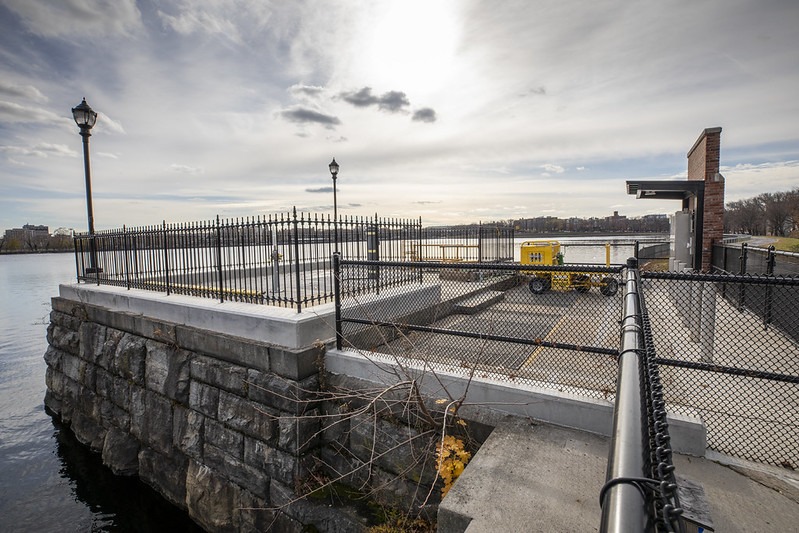
Photo courtesy of NYC Water
Pedestrian access to The Bronx’s Jerome Park Reservoir is a no go according to the NYC Department of Environmental Protection (DEP), news that is bound to disappoint local residents of Kingsbridge Heights, Bedford Park and Van Cortlandt Village, the neighborhoods which border the reservoir.
DEP officials announced in early February 2022 the completion of a $15.7 million project to rehabilitate gatehouses, install new fencing and upgrade security infrastructure at the Reservoir. They added that a new $38 million project was planned to further improve structural components of the reservoir to ensure it continues to fulfill what was described as its critical role in the City’s water supply system for decades to come.
“The $15.7 million investment in Jerome Park reservoir will help to ensure the long-term function of our water supply infrastructure,” DEP Commissioner Vincent Sapienzav said. “With more structural work on the horizon at Jerome Park Reservoir, we remain committed to working with our neighbors in the Bronx while carrying out these essential projects that will allow us to fulfill our critical mission of delivering a reliable supply of high-quality water to 8.8 million New Yorkers.”
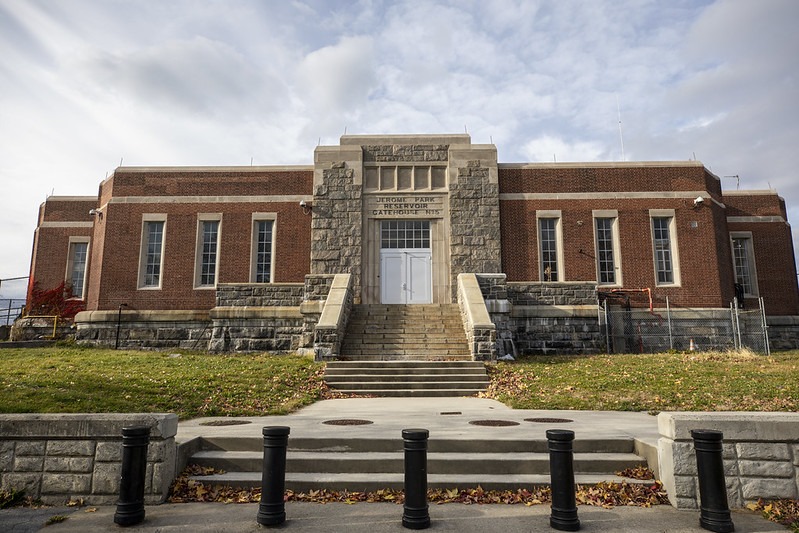
Photo courtesy of NYC Water
According to DEP, much of the 2022 completed work, which began in 2018, focused on gatehouses that control the flow of water into, and out of, the reservoir. Gatehouses No. 5 and No. 7, which connect with the Croton Water Filtration Plant, were refurbished, they said, adding that the brick facades were cleaned, repaired and repointed, new doors and security systems were installed, and the roof was replaced on Gatehouse No. 7.
They said the above-ground structures at the other three gatehouses, which were not original to the reservoir, were deconstructed and brick and limestone elements were salvaged and reused at new electrical enclosures. Historically appropriate lighting and railings modeled on those installed at the Central Park and Ridgewood Reservoirs were also provided, they said.
Additionally, DEP officials said the department also completed considerable work around the perimeter of the Reservoir, including the removal of a significant buildup of weeds and brush. The interior 10-foot-high fence along the edge of the reservoir basin walls was replaced with a four-foot-high fence to improve operational access as well as public views, and new vehicular guardrails were installed along the maintenance and operations path around the reservoir, they said.
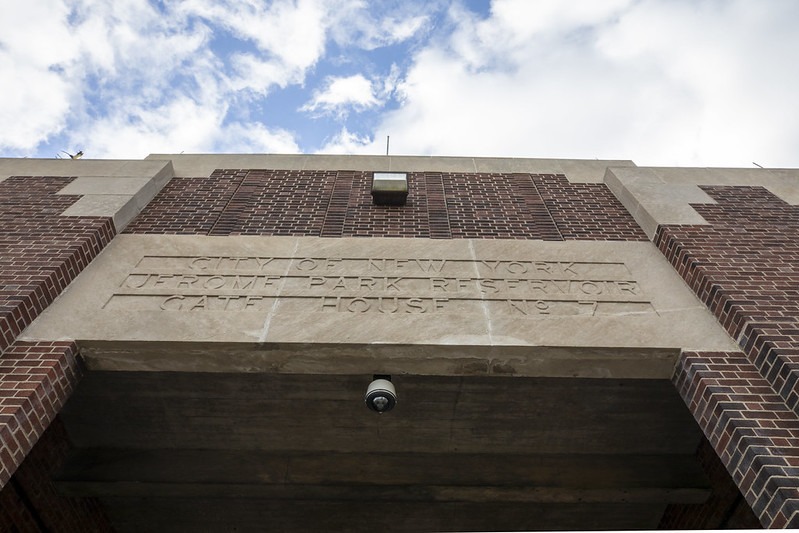
Photo courtesy of NYC Water
According to DEP, as part of its work to improve security throughout the entire water supply, the project at Jerome Park Reservoir also included the installation of new security cameras and traffic-control bollards.
DEP officials said the completion of the 2022 project will lead into yet another effort to improve what they said were some of the structural components at Jerome Park Reservoir. These were set to start in late 2022. They said this work will involve stabilizing and repairing the eastern wall of the reservoir and filling portions of the Old Croton Aqueduct, which runs alongside the reservoir, with a flowable concrete.
They said thereafter, the next project targets the completion of the upgrade of the interior fence, reducing the height from 10 to four feet, and the installation of the vehicular guardrail. They said this project will also rehabilitate the retaining wall that sets the reservoir apart from the parking lot at Lehman College and the dry-laid stone wall at the south end of the reservoir. It will also cover the installation of new asphalt roadways around the reservoir. According to DEP, the latest $38 million project is expected to take about four years to complete.
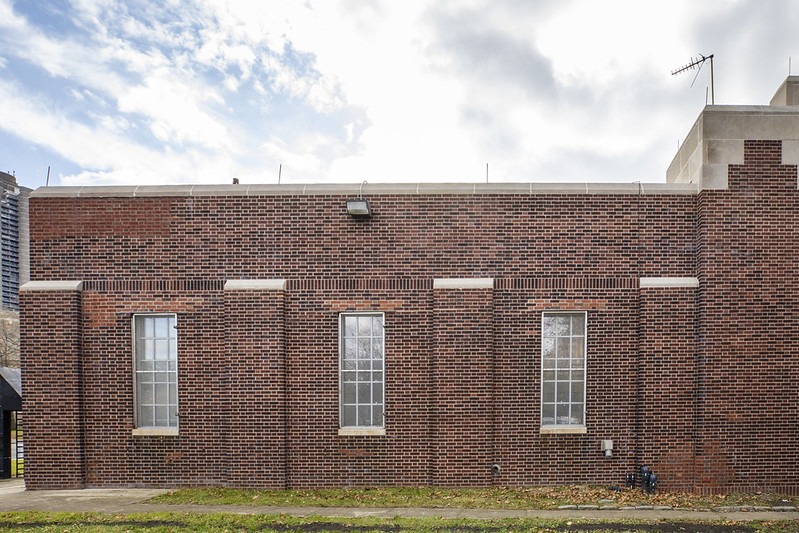
Photo courtesy of NYC Water
Norwood News had been reaching out to DEP on several occasions to ask about public access to the reservoir. We eventually received a response in late January 2023. A DEP spokesperson explained that New York City’s water supply system is composed of 19 reservoirs and 3 controlled lakes. He said depending on the part of the water supply system, DEP has different levels of public access to its reservoirs, described as follows:
Upstate Reservoirs
Most of the water supply is impounded in very large reservoirs (billions of gallons) in sparsely populated forests in the Catskills. The public is able to fish, boat, and hike around the lands (swimming in any reservoir is prohibited).
Distribution Reservoirs
Hillview Reservoir in Yonkers and Jerome Park Reservoir in The Bronx are the final two reservoirs that drinking water is held in before being distributed to the public. Because these reservoirs are both much smaller than those upstate, and much closer to the point of distribution, DEP has very strict security measures in place, and the public is not allowed access to those facilities.
Non-Water Supply Reservoirs
Historical reservoirs, like Jackie Onassis Reservoir in Central Park and the Ridgewood Reservoir in Brooklyn, are not connected to the water supply system at all, and are accessible to the public to walk, jog, hike, etc. Jerome Park Reservoir is NOT one of these.
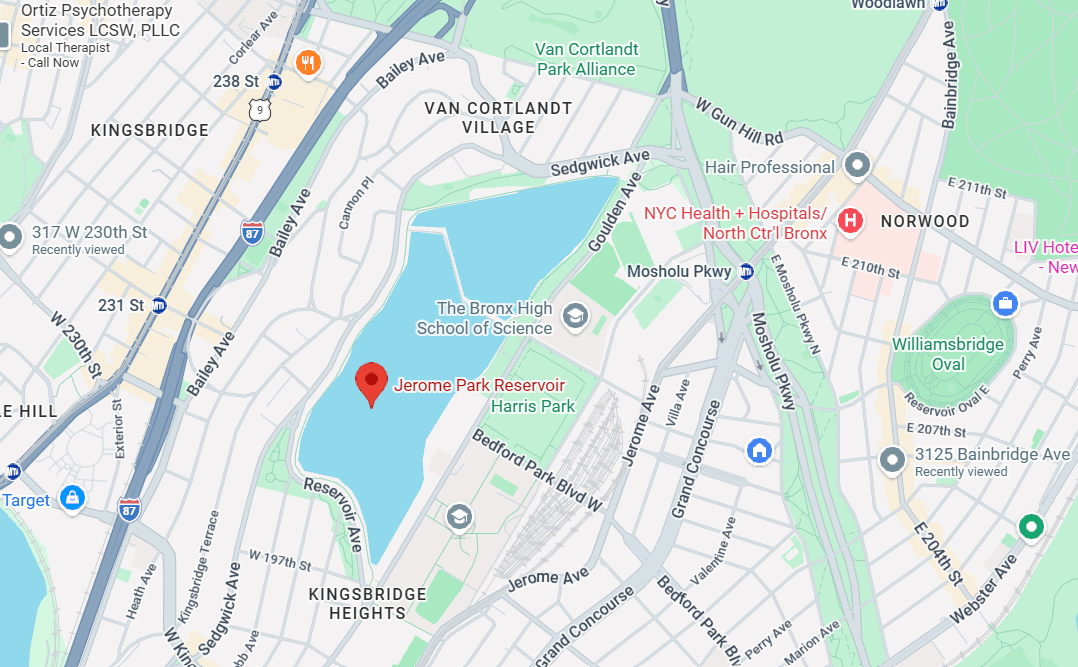
Image courtesy of Google Maps
The spokesperson said that up to 30% of New York City’s drinking water supply flows through the Jerome Park Reservoir before being filtered at the Croton Filtration Plant (in Van Cortlandt Park) and distributed to New Yorkers.
He acknowledged that the Bronx community had been petitioning DEP for access to the Jerome Park Reservoir for many years. At some points in the past, he said DEP had allowed periodic limited access. However, he said now that Jerome Park Reservoir is an active part of the water supply system, it no longer permits the public to access the facility. He said a presentation had been shared with Bronx Community Board 8 on the topic.
“There is no amount of additional security measures that DEP/NYPD recommend that would make the facility safe for consistent public use,” the spokesperson said.
Last month, as the reservoir building gate was open and while construction was ongoing, Norwood News spoke to some pedestrians and local residents about access to the reservoir. Not many wanted to talk due to the cold weather. One mom walking with a stroller said, “It will be nice if they can open it up in the spring where we can just walk around and enjoy the view.”
Another man who was working out in the area said it would be nice if he could jog inside the reservoir since right now, he just jogs around the outside of it.
Though the reservoir building gate was open, only workers and trucks were allowed in.

admin
Welcome to the Norwood News, a bi-weekly community newspaper that primarily serves the northwest Bronx communities of Norwood, Bedford Park, Fordham and University Heights. Through our Breaking Bronx blog, we focus on news and information for those neighborhoods, but aim to cover as much Bronx-related news as possible. Founded in 1988 by Mosholu Preservation Corporation, a not-for-profit affiliate of Montefiore Medical Center, the Norwood News began as a monthly and grew to a bi-weekly in 1994. In September 2003 the paper expanded to cover University Heights and now covers all the neighborhoods of Community District 7. The Norwood News exists to foster communication among citizens and organizations and to be a tool for neighborhood development efforts. The Norwood News runs the Bronx Youth Journalism Heard, a journalism training program for Bronx high school students. As you navigate this website, please let us know if you discover any glitches or if you have any suggestions. We’d love to hear from you. You can send e-mails to norwoodnews@norwoodnews.org or call us anytime (718) 324-4998.