


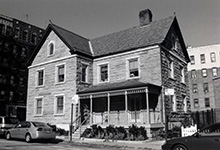

The year began with a furor in Bedford Park over the city’s new unannounced plan to house the growing homeless population. That anger spread to other Bronx neighborhoods and now the city is fending off lawsuits regarding its homeless housing program.
But let’s rewind to the beginning.
A year ago, around the holidays, teachers and other faculty at PS 8, an overcrowded elementary school on Briggs Avenue at Mosholu, noticed extensive work being done at an apartment building across the street. New furniture, including several bunk beds, was being brought into the building.
We soon learned that most of the building’s units were being transformed for use as transitional housing for homeless families. Anger among PS 8 faculty and local residents erupted at a packed community board meeting.
Many objected to having a homeless shelter located across the street from an elementary school. They were also irate that no one had bothered to alert the community about what was happening and worried the new population would overburden the already overcrowded elementary school.
After the Norwood News ran a story on the new shelter and the community’s angry reaction, tenants at another building nearby, on Mosholu Parkway, said half their building was turned over to transitional homeless housing three months earlier.
Because the buildings were rent-stabilized, local housing advocates said the city’s new policy was gobbling up invaluable affordable housing units, which only compounded New York’s homeless problems.
Both rent-stabilized buildings had hundreds of outstanding housing code violations, which raised questions as to whether the landlords had neglected maintenance and repairs in an effort to get tenants to leave. They definitely had the motivation, as the operators of the shelters paid far more per unit than what they were receiving from existing tenants. Advocates and community leaders said this arrangement could set a dangerous precedent because it appeared landlords were being rewarded for neglecting existing tenant needs.
The policy attracted citywide media attention. The outrage that accompanied it led the Department of Homeless Services (DHS) to revise its policy and withdraw from turning another Bedford Park building into a homeless shelter. It’s now DHS policy to inform the community prior to setting up a shelter, but only if they are using more than half of the building’s units.
Tenants at the Briggs Avenue building (only three of the 25 units house permanent tenants) said conditions had improved since the new arrangement began.
But tenants at the Mosholu Parkway building say their quality of life has dropped dramatically since the arrival of their new neighbors. In late July, Peter Rivera, the director of Aguila, Inc., which operates both shelters (and several others in the Bronx and Manhattan), said he would address complaints of excessive noise, trash and drug use at the Mosholu building.
For a week, tenants said there were very few problems, but the issues soon returned.
This fall, Westchester Square residents and business leaders took the city to court after DHS began housing homeless families at a new apartment building without notifying the community. The court ruled that the shelter could stay, but residents remain upset about the whole process. Nearly two-fifths of the city’s shelters are in the Bronx.
With the city’s homeless population jumping 30 percent in the last year, DHS officials say expediency is their main concern, regardless of how their methods are affecting the community.

admin
Welcome to the Norwood News, a bi-weekly community newspaper that primarily serves the northwest Bronx communities of Norwood, Bedford Park, Fordham and University Heights. Through our Breaking Bronx blog, we focus on news and information for those neighborhoods, but aim to cover as much Bronx-related news as possible. Founded in 1988 by Mosholu Preservation Corporation, a not-for-profit affiliate of Montefiore Medical Center, the Norwood News began as a monthly and grew to a bi-weekly in 1994. In September 2003 the paper expanded to cover University Heights and now covers all the neighborhoods of Community District 7. The Norwood News exists to foster communication among citizens and organizations and to be a tool for neighborhood development efforts. The Norwood News runs the Bronx Youth Journalism Heard, a journalism training program for Bronx high school students. As you navigate this website, please let us know if you discover any glitches or if you have any suggestions. We’d love to hear from you. You can send e-mails to norwoodnews@norwoodnews.org or call us anytime (718) 324-4998.