



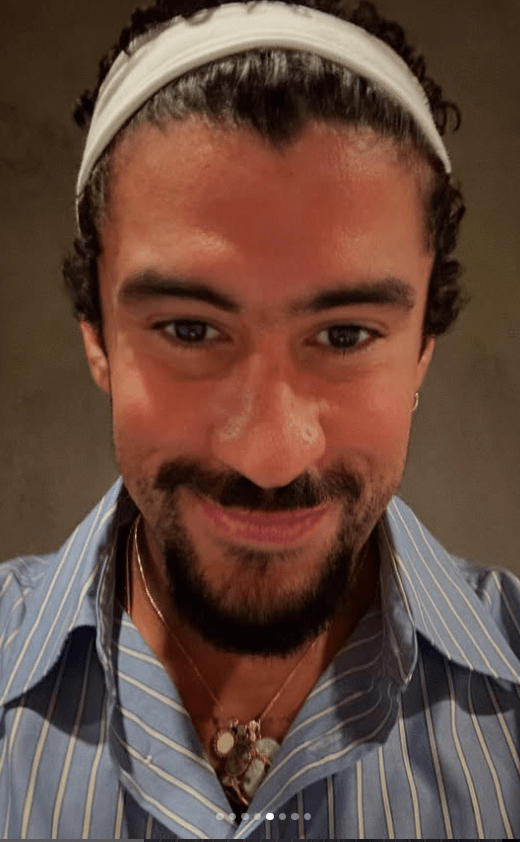
Photo courtesy of Bad Bunny
Musical megastar Bad Bunny’s 21-day musical residency in Puerto Rico pumped $200 million dollars into the U.S. territory’s local economy. “It is a rare example of fame being used for good,” writes Adrian Horton of the Guardian. While Bad Bunny’s concerts are making the cash registers ring, his political speeches are making life harder for the 3.2 million U.S. citizens living in the unequal and undemocratic territory of Puerto Rico.
“As one of the island’s loudest cultural voices, Bad Bunny is using his global platform to promote a misleading narrative, one that suggests Puerto Ricans want (political) separation from the United States, when in fact the opposite is true,” writes George Laws Garcia of the U.S. Puerto Rico Statehood Council in D.C.
The artist, whose real name is Benito Antonio Martinez Ocasio, supports the dignified status option of political independence for Puerto Rico, but his advocacy for this position clashes with the reality that island voters want Congress to make Puerto Rico a state. This is evidenced by the results of the November 2024 plebiscite in which 58.61% of voters voted for statehood, 29.57% voted for sovereignty in free association with the United States, and 11.82% voted for independence.
Indeed, in the four status consultations held between 2012 and 2024, Puerto Ricans selected statehood as their preferred status option. Bad Bunny opposes statehood because he fears that political integration will eviscerate Puerto Rico’s cultural heritage. “I don’t want it to be Hawaii,” he says.
Political integration does not require cultural assimilation. The former U.S. territories of California, Texas, Arizona, Florida, New Mexico and Louisiana all became states while maintaining their ancestral Hispanic/Creole traditions.
Puerto Ricans in New York vote in presidential elections, elect individuals to serve their interests in the U.S. Senate and House of Representatives and celebrate their heritage in annual festivals held in Buffalo, Rochester, Syracuse and New York City.
Blaming outsiders for the fiscal and political problems that stem from living in an unequal U.S. territory is an effective, but dishonest misdirect. As a U.S. territory, Puerto Rico falls under the territorial clause of the Constitution.
“The Congress shall have the power to dispose of and make all needful Rules and Regulations respecting the Territory or other Property belonging to the United States,” an extract reads. In layman’s terms, that means that Congress holds all the cards.
This arrangement allows Congress to unilaterally impose a financial control board and treat Puerto Rico worse than it treats a state in respect of programs like Social Security, Medicare, Medicaid and Nutritional Assistance. As an unequal and undemocratic territory of the federal government, Puerto Rico is powerless to resist laws passed by Congress, signed by the president and ruled legal by the U.S. supreme court.
“Instead of using his platform to advocate for equality and full rights for the U.S. citizens of Puerto Rico, he amplifies a minority political view, independence, that has never earned majority support in any plebiscite,” writes George Laws Garcia about Bad Bunny.
To be clear, Puerto Rico’s territorial status is undemocratic, colonial and that it must change. Bad Bunny’s rhetoric disregards this fact. The future of Puerto Rico should be decided by ballots cast by Island residents seeking to end their unequal and undemocratic status as a U.S. territory.
Congress should listen and act.
Gene Roman works as a freelance reporter and lives in The Bronx.
Editor’s Note: CNN recently reported that Bad Bunny has chosen to skip touring in the U.S. for fear of ICE raids.
To read other stories on Puerto Rico, click here, here and here and for some recent op-eds and opinion pieces, click here, here, and here.
To read more on Bad Bunny’s series of Puerto Rican concerts, click here.

admin
Welcome to the Norwood News, a bi-weekly community newspaper that primarily serves the northwest Bronx communities of Norwood, Bedford Park, Fordham and University Heights. Through our Breaking Bronx blog, we focus on news and information for those neighborhoods, but aim to cover as much Bronx-related news as possible. Founded in 1988 by Mosholu Preservation Corporation, a not-for-profit affiliate of Montefiore Medical Center, the Norwood News began as a monthly and grew to a bi-weekly in 1994. In September 2003 the paper expanded to cover University Heights and now covers all the neighborhoods of Community District 7. The Norwood News exists to foster communication among citizens and organizations and to be a tool for neighborhood development efforts. The Norwood News runs the Bronx Youth Journalism Heard, a journalism training program for Bronx high school students. As you navigate this website, please let us know if you discover any glitches or if you have any suggestions. We’d love to hear from you. You can send e-mails to norwoodnews@norwoodnews.org or call us anytime (718) 324-4998.