


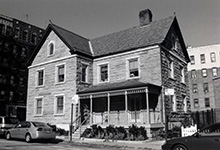

District 10’s new Community District Education Council led one of its first public meetings last fall from a long table on PS 85’s auditorium floor. The move down from the stage where their predecessors, the more insular community school boards, reigned, was a symbolic gesture to bring themselves closer to parents.
What they got was an earful of complaints and the ushering in of their difficult and ambiguously defined new roles (within a few months, their names had changed from Community Education Councils to Community District Education Councils). But after five months, local Council 10 is beginning to find its voice.
Councils citywide have struggled to define themselves since replacing the boards. They’ve also fought to get more access to schools and support from the Department of Education (DOE).
Comprised of parents elected by parent association leaders, the councils have had to find their way with little training in the nuts and bolts of school administration. “The focus of the training was how to work together as a team,” said Marvin Shelton, Council 10 President, at the Dec. 16 public meeting. “I don’t know if we really needed to get a group hug. I wish we had gotten more data [about the school system].”
Many school principals have also been unclear about the councils’ roles, and not altogether welcoming of their visits. Council 10 is working with their regional administrator, Joel DiBartolomeo, to work out these kinks.
Not all of the councils have played nice with DOE. A consortium of them banded together last month to sue the city for obstructing their efforts to gain access to schools and support parents.
Shelton said that Council 10 decided against joining the suit. “We’re not satisfied with the progress per se,” he said, “but other districts are not doing as well as we are.”
Some Bronx councils aren’t even up and running, according to Council 10 Member Davon Russell. “We never have a meeting with less than a quorum,” Russell said. “It shows our commitment to making this work.”
Many members seem to be developing a friendly rapport with each other, and with DiBartolomeo. Regional Superintendent Irma Zardoya’s decision to show up to this month’s meeting to discuss a controversial restructuring proposal shows that the region takes them seriously.
“Irma and I do seek your advice,” DiBartolomeo said.
Still, the council has a way to go. The public meetings are poorly attended and sometimes lack focus. Some members seem alert and engaged, but others are consistently silent.
But the Council is slowly settling in, and is even planning for next year. Shelton intends to make recommendations on how future members are trained. “Next year, we should expect more from DOE,” he said.

admin
Welcome to the Norwood News, a bi-weekly community newspaper that primarily serves the northwest Bronx communities of Norwood, Bedford Park, Fordham and University Heights. Through our Breaking Bronx blog, we focus on news and information for those neighborhoods, but aim to cover as much Bronx-related news as possible. Founded in 1988 by Mosholu Preservation Corporation, a not-for-profit affiliate of Montefiore Medical Center, the Norwood News began as a monthly and grew to a bi-weekly in 1994. In September 2003 the paper expanded to cover University Heights and now covers all the neighborhoods of Community District 7. The Norwood News exists to foster communication among citizens and organizations and to be a tool for neighborhood development efforts. The Norwood News runs the Bronx Youth Journalism Heard, a journalism training program for Bronx high school students. As you navigate this website, please let us know if you discover any glitches or if you have any suggestions. We’d love to hear from you. You can send e-mails to norwoodnews@norwoodnews.org or call us anytime (718) 324-4998.