


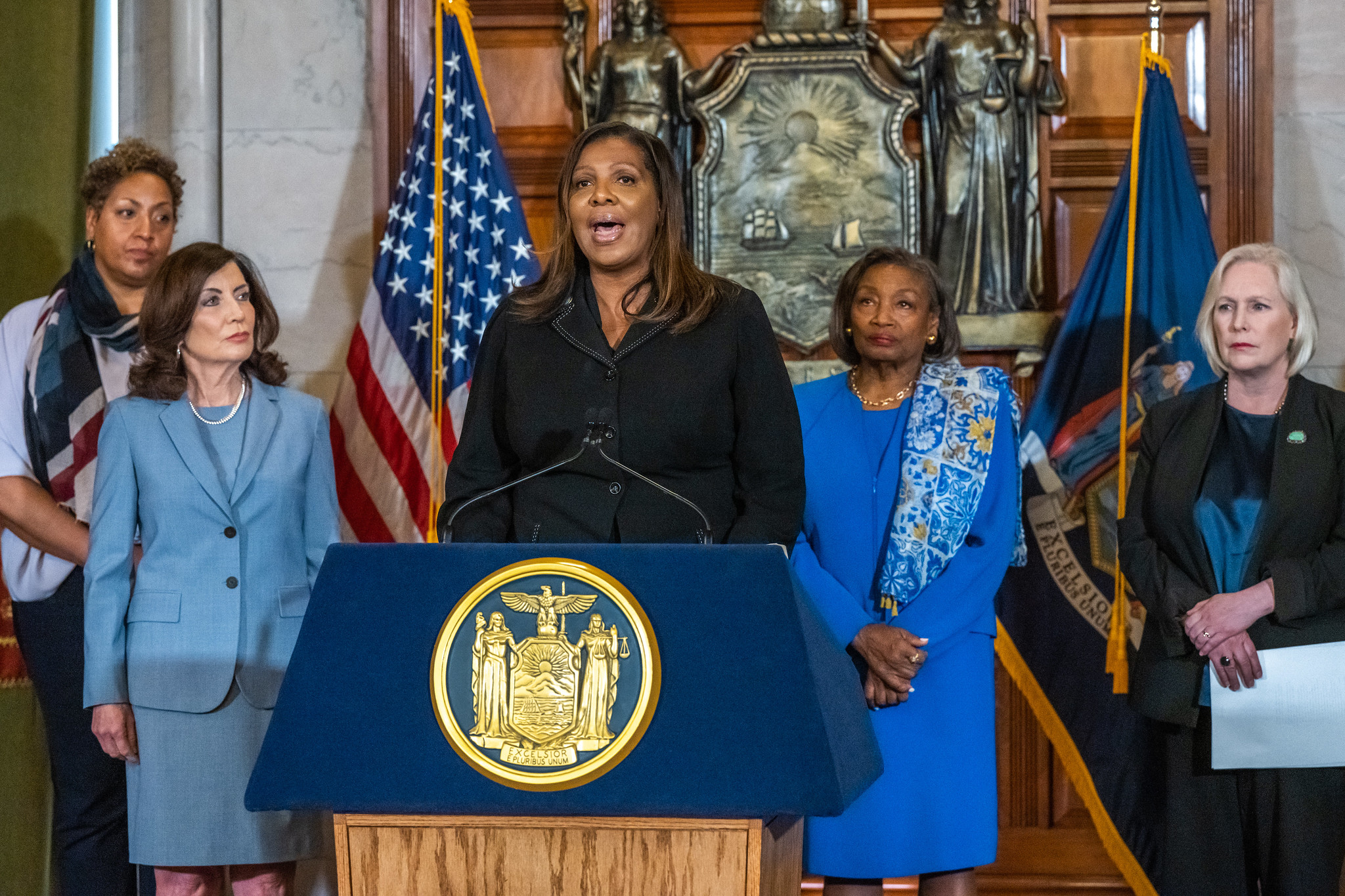
Photo courtesy of Darren McGee/Office of Governor Kathy Hochul
New York Attorney General Letitia James issued a consumer alert on Tuesday, Aug. 12, warning New Yorkers of fake or invalid tickets to concerts by Benito Antonio Martinez Ocasio, otherwise known as the artist “Bad Bunny.” A popular Puerto Rican rapper, singer, actor, and record producer, Bad Bunny has a huge fan base in New York and around the world and is performing concerts in San Juan, Puerto Rico through Sept. 14.
The news comes as it was also reported that a young male New Yorker from Queens was fatally shot in San Juan on Sunday, Aug. 10, while attending a Bad Bunny concert on the island.
Meanwhile, officials from the Office of the Attorney General (OAG) said they received a complaint from New Yorkers who purchased tickets to the concert and traveled to Puerto Rico but were denied entry because they were told their tickets were invalid. James is now urging New Yorkers to follow tips provided by her office to avoid concert ticket scams and to contact her office by filing a complaint online if ticketholders are or were sold fake or invalid tickets.
“Bad Bunny is a musical icon in New York, and scammers are taking advantage of his popularity to sell fake concert tickets,” said James. “People have paid thousands of dollars to travel to Puerto Rico and see Bad Bunny perform, only to be turned away at the door because the tickets they were sold were fake. Too often, scammers take advantage of big events to dupe people out of their hard-earned money, and I am urging New Yorkers to take caution when purchasing their Bad Bunny concert tickets.”
The OAG issued the following tips to help New Yorkers avoid concert ticket scams. When purchasing tickets secondhand, consumers should:
- Check to see if the venue, performer, or event has an official, verified source for buying and reselling tickets.
- If you are buying tickets from a ticket reseller, only purchase through a reputable ticket resale platform that guarantees it will provide a refund if something goes wrong. An illegitimate reseller could provide a ticket that is counterfeit or in a location that is different than what was advertised, or not provide a ticket at all.
- Avoid paying for tickets by cash, wire transfer, or pre-paid money transfer. If the tickets turn out to be fake, it is highly unlikely you will get your money back. If you pay by credit card or PayPal and the tickets turn out to be fake, you can dispute the charge.
- Be wary of ticket prices that are too good to be true or sold with any high-pressure sales tactics. Ask questions of the seller to verify that the tickets are legitimate. Ask to see their proof of purchase. If the deal seems too good to be true, it probably is.
- If you buy from an online ticket broker, check out its reputation first through the Better Business Bureau and consumer complaint sites. Tickets from reputable online brokers may be expensive, but they may come with added protections. For example, some brokers will provide replacement tickets or full refunds if the tickets turn out to be fake.
- Be wary of tickets that are printed at home. Even though a ticket looks authentic, it may not be. Many venues allow consumers to print tickets from their personal computers. Scammers can sell the same ticket to multiple buyers. Based on the barcode, only the first buyer to show up at the venue will get in.
- Counterfeiters can also reproduce barcodes – you may get into the venue, but then the real ticket holder shows up and you have to leave. When possible, seek out tickets printed by the venue.
- If you believe you are the victim of a scam, you can contact the Office of the Attorney General by calling 1-800-771-7755 or file an online complaint.

admin
Welcome to the Norwood News, a bi-weekly community newspaper that primarily serves the northwest Bronx communities of Norwood, Bedford Park, Fordham and University Heights. Through our Breaking Bronx blog, we focus on news and information for those neighborhoods, but aim to cover as much Bronx-related news as possible. Founded in 1988 by Mosholu Preservation Corporation, a not-for-profit affiliate of Montefiore Medical Center, the Norwood News began as a monthly and grew to a bi-weekly in 1994. In September 2003 the paper expanded to cover University Heights and now covers all the neighborhoods of Community District 7. The Norwood News exists to foster communication among citizens and organizations and to be a tool for neighborhood development efforts. The Norwood News runs the Bronx Youth Journalism Heard, a journalism training program for Bronx high school students. As you navigate this website, please let us know if you discover any glitches or if you have any suggestions. We’d love to hear from you. You can send e-mails to norwoodnews@norwoodnews.org or call us anytime (718) 324-4998.