



Spurred by reductions in federal funding, Montefiore Medical Center has restructured its treatment plan for patients suffering from sickle cell disorders. The new plan, which officially went into effect on Jan. 12, means outpatient services have been relocated and patients suffering from flare-ups will have to rely more on emergency rooms for immediate care.
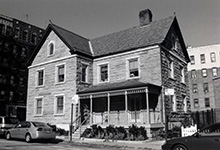
From now on, services for sickle cell patients will be housed on the second floor of Montefiore’s Medical Arts Pavilion, on Bainbridge Avenue just across from Montefiore’s main Moses Division campus in Norwood, where the services were previously provided in the Bronx Comprehensive Sickle Cell Center.
The center was previously open five days a week, but the restructuring means specialized care at the new location will only be available by appointment on Tuesdays and Thursdays.
In its previous form, the center was hailed by sickle cell specialists around the country as the model for quality and personalized care.
Despite the loss of funding, Montefiore pledged to continue offering “specialty care at the highest level” in a letter addressed to patients of the center.
Montefiore also issued a statement addressing the issue. “These changes were made necessary due to a drastic cutback in National Institute of Health funding for Sickle Cell Programs across the country,” the statement read. “In these difficult financial times, Montefiore maintains its strong commitment to continue its Sickle Cell services to ensure the health needs of all our patients are met.
Donnette Carroll, who lives with the disorder and is president of the Sickle Cell Thalassemia Patients Network, says the shift in the treatment plan leaves patients without a means to receive adequate attention.
Michael Quane, a Montefiore spokesperson, said the new schedule will still be able to accommodate the 20 outpatients per week the center averaged, with “minimal waiting.”
But Bruce Blount, a patient from Throggs Neck who frequented the center for more than 25 years, said the figure of 20 outpatients is misleading. “All sickle diseases are not the same,” he said. “The overall number of weekly visits to the center depends on the severity of each patient’s disease. It was very important to the community. A lot of people depended on the center.”
Most patient anxiety stems from the new model’s emphasis on emergency room visits for immediate care. Carroll claims reliance on emergency staff removes the familiarity between patient, doctor, and social worker necessary for swift and successful pain management. “You’re out on your own now,” she said.
“The staff at the sickle center knew us like the back of their hand,” said 30-year-old Hunts Point resident Dance Fountain, who frequented the center from the age of 17. “We miss having that personalized care. Now when you go to the emergency room, you’re nothing but a random face.”
One patient from Bedford Park, Desiree, who declined to give her last name, said she waited more than five hours until 4 a.m. on Jan. 12 for treatment of a pain crisis.
It’s unclear how many people in the city suffer from sickle cell disorders, but they afflict some 80,000 people nationwide, according to the National Human Genome Research Institute. African-Americans and Hispanics are disproportionately diagnosed with the disease.
Sickle cell disorders affect a person’s red blood cells, causing the normally disk-shaped cells to take on a crescent form. The misshapen cells constrict already narrow blood vessels, causing severe pain that can last from days to weeks and often requires hospitalization.
“This is chronic pain,” said Carroll, in reference to the disease’s most common symptom, “It doesn’t go into remission. You live with this for the rest of your life.”
Ed. note: The Norwood News is published by Mosholu Preservation Corporation, a not-for-profit affiliate of Montefiore.

admin
Welcome to the Norwood News, a bi-weekly community newspaper that primarily serves the northwest Bronx communities of Norwood, Bedford Park, Fordham and University Heights. Through our Breaking Bronx blog, we focus on news and information for those neighborhoods, but aim to cover as much Bronx-related news as possible. Founded in 1988 by Mosholu Preservation Corporation, a not-for-profit affiliate of Montefiore Medical Center, the Norwood News began as a monthly and grew to a bi-weekly in 1994. In September 2003 the paper expanded to cover University Heights and now covers all the neighborhoods of Community District 7. The Norwood News exists to foster communication among citizens and organizations and to be a tool for neighborhood development efforts. The Norwood News runs the Bronx Youth Journalism Heard, a journalism training program for Bronx high school students. As you navigate this website, please let us know if you discover any glitches or if you have any suggestions. We’d love to hear from you. You can send e-mails to norwoodnews@norwoodnews.org or call us anytime (718) 324-4998.