



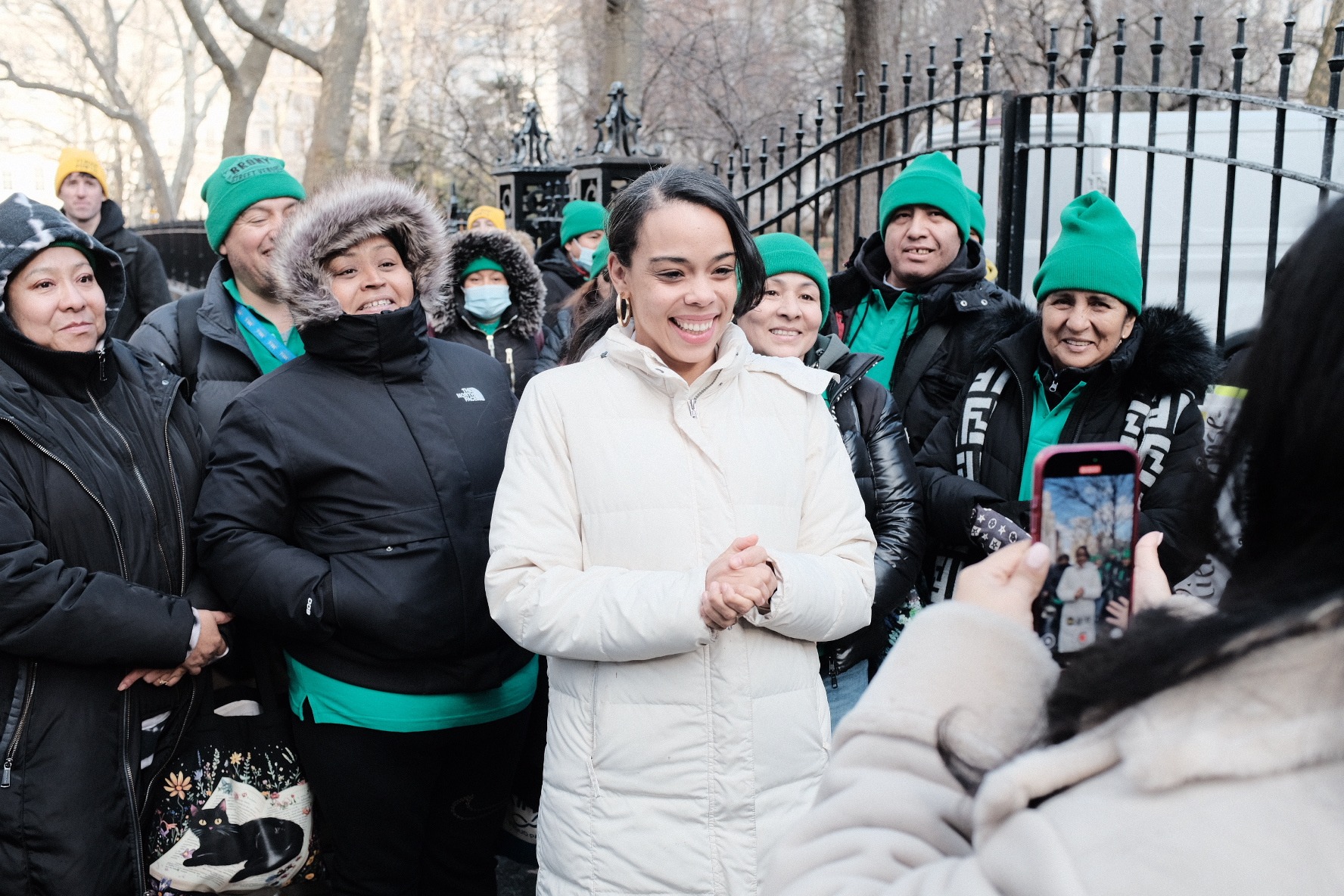
Photo courtesy of the Office of Pierina Sanchez (C.D. 14)
Though the street vendor movement made history on Thursday, Dec. 18, with a supermajority (39/51) of the City Council voting “aye” to pass bills 431-B, 408, and 1251 after years of advocacy and with what was described as a broad coalition of support, former Mayor Eric Adams vetoed the bills, along with around 16 others, on the last day of his term on Dec. 31.
Known as the “Street Vendor Reform Package,” Council Member Pierina Sanchez (C.D. 14) said the package allows New York City’s smallest businesses to grow within a regulated, predictable, and enforceable system that bolsters the City’s business and hospitality sector overall.
Sanchez, advocates and elected officials had gathered at City Hall ahead of the vote to call for the passing of the bills, saying they had the support of a broad coalition of street vendors, brick-and-mortar businesses, public space advocates, and elected colleagues.
According to officials at Sanchez’s office, around 23,000 street vendors, the majority of whom are immigrants, people of color, military veterans and women, work as small business owners supplying food and other goods to New Yorkers. They said despite contributing millions of dollars annually to the city’s economy, most have been blocked from acquiring permits for their business due to what was described as an arbitrary, decades-old cap on the number of licenses and permits in circulation.
They said the Independent Budget Office estimates that the passage of the Street Vendor Reform Package can have a net revenue impact of $59 million to the City economy annually.
Sanchez said she was incredibly proud that the years of hard work, keeping vendors, brick-and-mortar businesses, and advocates at the table, led to the successful vote. “Today, the Council passed a comprehensive package: Int. 431-B, which expands access to vending licenses and pairs it with clear, enforceable standards to protect quality of life on our commercial corridors; Int. 1251-A, which ensures licenses are actually issued each year instead of sitting on paper; and Int. 408-A, which creates a new Division of Street Vendor Assistance to provide education and support so vendors can comply with the law.”
According to Sanchez’s office, Int. 431-B, which she sponsored, balances incentives with enforcement by requiring increased enforcement personnel, adding new mandatory suspension and revocation license language, and issuing licenses to bring existing vendors into the regulatory system.
Meanwhile, Int. 1251-A, sponsored primarily by Public Advocate Jumaane Williams, will address administrative delays in the licensing process, while Int. 408-A’s newly created Division of Street Vendor Assistance within NYC Department of Small Business Services will be charged with providing training, outreach, and education to all food vendors and general vendors. The latter bill was sponsored by City Council Majority Leader Amanda Farías (C.D. 18).
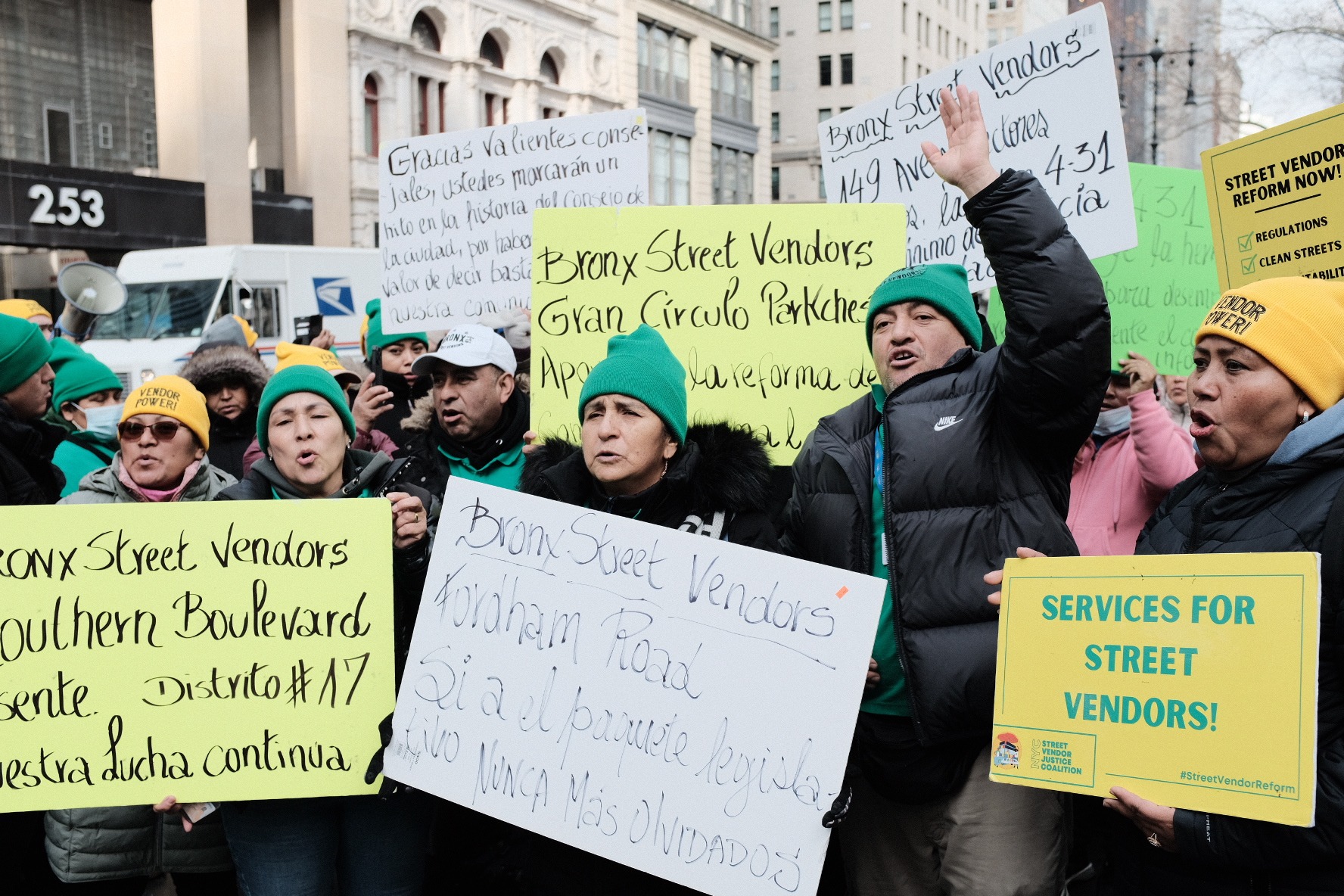
Photo courtesy of the Office of Pierina Sanchez (C.D. 14)
This will cover entrepreneurship and compliance with all applicable local laws, rules, and regulations, giving street vendors access to many of the same tools afforded to other small businesses.
The councilwoman said implementation of the package wouldn’t be easy but added that she was committed to staying the course, to continuing to engage all stakeholders, and to working with the incoming Mamdani administration to get it right for vendors, for small businesses, and for all New Yorkers. “As the daughter and granddaughter of street vendors, I could not be more proud of how far we’ve come,” Sanchez had said on Dec. 18.
For her part, Farías said street vending reform was not just about permits, but economic justice, community vitality, and whether the City makes room for working-class entrepreneurs to succeed. “This package reflects years of work convening vendors, small businesses, chambers, developers, BIDs, and city partners to build a system that works for everyone,” she said.
She said as a leader on the Street Vendor Reform legislative package, she was proud to advance reforms that modernize what she said were outdated policies and that dismantle what she said were discriminatory barriers that have held communities back. “Street vendors are the seed of neighborhood vitality, and with the passage of this legislation, the growth of The Big Apple is grounded in local, community-driven commerce,” she added.
Williams said street vendors provided some of the most affordable options for New Yorkers facing an increasingly unaffordable city and yet don’t have the support they need to survive. “In speaking with vendors about the barriers they face, it’s clear we can do more, and an office dedicated to street vendor assistance will help these entrepreneurs navigate obstacles to licensing, inconsistency in enforcement, and regulations that make it near-impossible to operate in a successful and sustained way,” he said in part.
Mohamed Attia, managing director of the Street Vendor Project at the Urban Justice Center said thousands of street vendors led a movement to reform the street vending system and make sure it’s equitable, predictable, and enforceable. “Today they’re reaping what they worked hard on,” he said in part. “The Street Vendor Reform package creates tens of thousands of opportunities for our smallest businesses, while ensuring investments made to support vendors with resources they desperately need. We’re proud of the broad coalition we’ve built throughout this journey, from immigrant right advocates to small business associations to public space advocacy groups, who pushed this vision with us to the finish line.”
Nelson Eusebio, director of government relations for the National Supermarket Association, also weighed in saying New York’s street vending system had been broken for far too long, hurting both vendors and the brick-and-mortar small businesses that anchor the City’s neighborhoods. He said he was proud to stand with Sanchez and others in support of what he said were responsible reforms that bring fairness, accountability, and order to the City’s streets. “The National Supermarket Association remains committed to working with the Council, city agencies, and our fellow stakeholders to ensure these reforms are implemented effectively and deliver for all New Yorkers,” he added.
Shamier Settle, senior policy analyst at Immigration Research Initiative, said that in 2024, the Immigration Research Initiative estimated that three quarters of food vendors were unable to get permits. “Street vendors want to do the right thing,” he said in part. “Today’s vote will raise the caps to reasonable levels, so vendors can get the permits and licenses they need.”
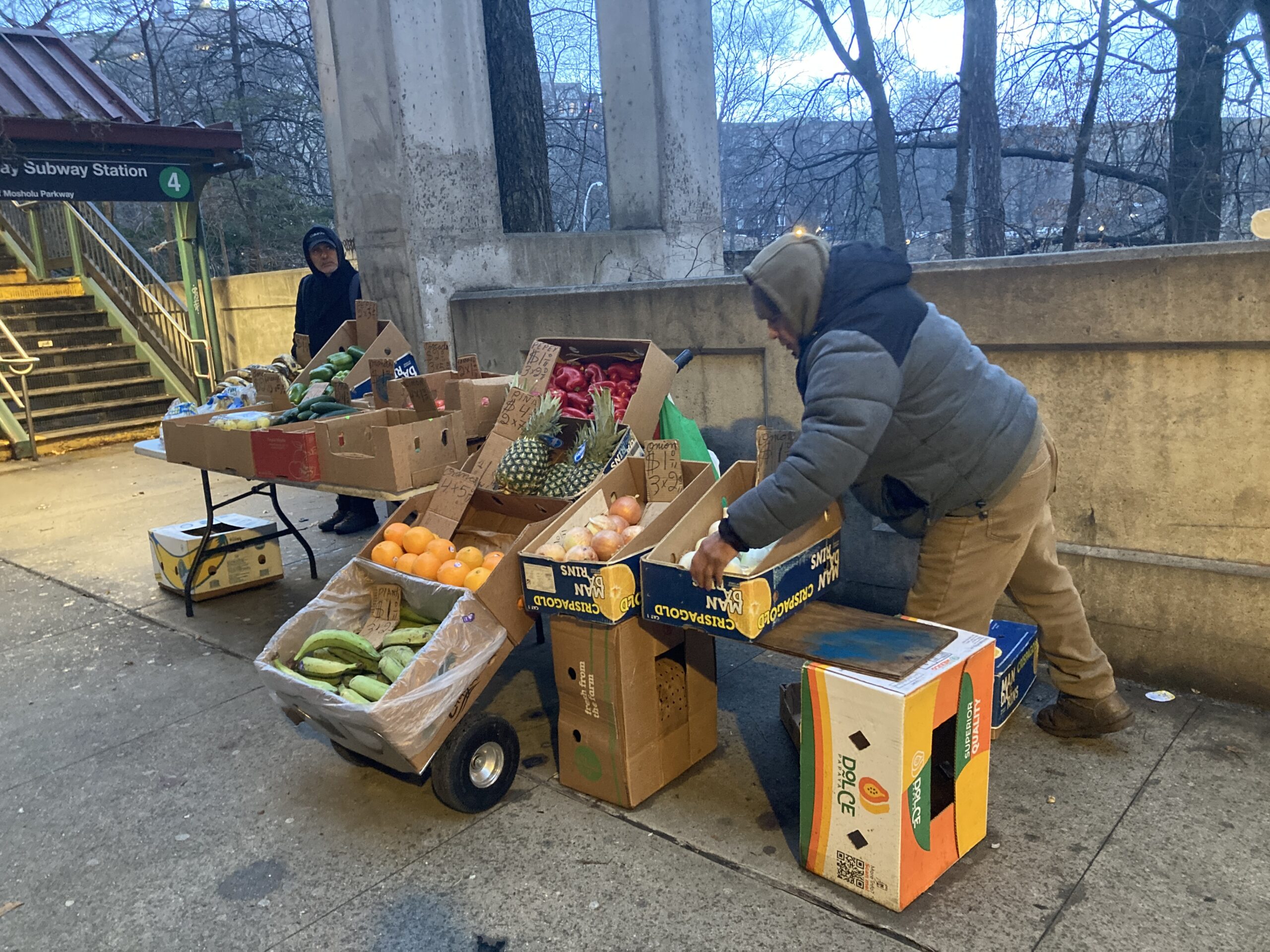
Photo by Síle Moloney
Meanwhile, Sandra Lobo, executive director of the Northwest Bronx Community & Clergy Coalition, said the coalition had organized alongside Bronx merchants and street vendors who she said do honest work to feed their families and keep local neighborhood corridors active and safe. She said the package creates a long-overdue pathway for vendors to come into the legal system, get the support and training they need, and follow clear rules with real accountability, instead of being left vulnerable to instability, fines and displacement.
Lobo had ensured that small businesses, including street vendors, were very much part of the conversation when it came to the future multi-purpose use of the soon-to-be-redeveloped Kingsbridge Armory.
With new (very pro-immigrant) Mayor Zohran Mamdani and a new Council Speaker Julie Menin, now leading the City, it remains to be seen what will happen to the vetoed bills. Norwood News spoke to a street vendor operating underneath Mosholu Parkway subway station which serves the 4 on Dec. 19 train about the passage of the bills, and he said he was unaware of the latest developments. We will share any updates we receive.

admin
Welcome to the Norwood News, a bi-weekly community newspaper that primarily serves the northwest Bronx communities of Norwood, Bedford Park, Fordham and University Heights. Through our Breaking Bronx blog, we focus on news and information for those neighborhoods, but aim to cover as much Bronx-related news as possible. Founded in 1988 by Mosholu Preservation Corporation, a not-for-profit affiliate of Montefiore Medical Center, the Norwood News began as a monthly and grew to a bi-weekly in 1994. In September 2003 the paper expanded to cover University Heights and now covers all the neighborhoods of Community District 7. The Norwood News exists to foster communication among citizens and organizations and to be a tool for neighborhood development efforts. The Norwood News runs the Bronx Youth Journalism Heard, a journalism training program for Bronx high school students. As you navigate this website, please let us know if you discover any glitches or if you have any suggestions. We’d love to hear from you. You can send e-mails to norwoodnews@norwoodnews.org or call us anytime (718) 324-4998.