




Photo by Luis Graterol on Unsplash
NYC Emergency Management (NYCEM) and the NYC Department of Health and Mental Hygiene (DOHMH) have issued an Extreme Heat Warning, citing the National Weather Service (NWS) forecast for the first heat wave of the season. Heat indices are expected to reach over 100°F over the coming days.
NYC Mayor Eric Adams urged New Yorkers on Saturday, June 21, to take precautions as high heat is expected to continue through Wednesday, June 25.
New York City defines extreme heat events as periods when the heat index is 100°F or higher for one or more days, or 95°F or higher for two or more consecutive days.
“Summer in the city is here, and so is our first heat wave of the year,” said Adams. This extreme heat will not just be uncomfortable and oppressive, it will be brutal and it will be dangerous to those who spend extended periods outside. This week’s heat wave could be deadly and life threatening if you are not prepared.”
The mayor continued in part, “That’s why New York City has a plan to beat the heat. Know your cool options, whether it’s your own home, the home of a friend or family member with an air conditioner, a mall, a library, a museum, or an official city cooling center, and consider taking care of tasks that require you to be outdoors today or during off-peak hours when the sun is not as intense.”
Meanwhile, NYCEM Commissioner Zach Iscol said, “After a cooler, rainier start to June, this sudden heatwave may catch some New Yorkers off guard.
He continued, “As temperatures soar to nearly 100 degrees this week, we urge all New Yorkers to take the heat seriously. Stay hydrated, avoid strenuous outdoor activities, and, most importantly, find places in your neighborhood to cool down, so you and your family avoid the dangerous consequences of heat illness.”
For her part, New York Gov. Kathy Hochul announced on June 21 that water and other refreshments will be made available to those standing in line to vote across New York State through Election Day amid the current heatwave.
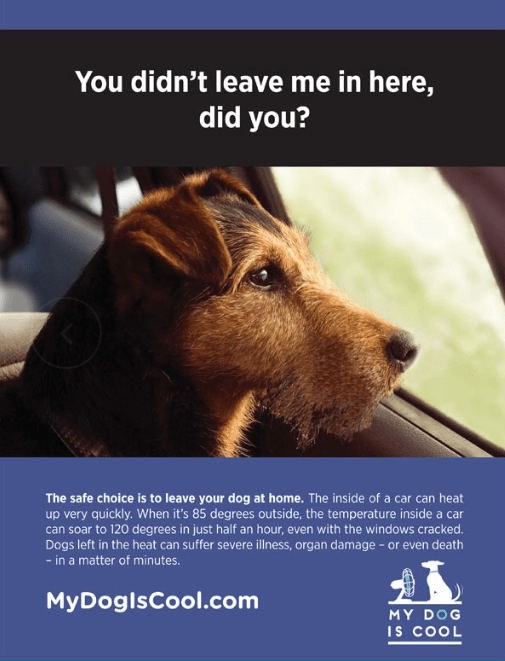
Flier courtesy of My Dog is Cool
City officials said high heat is a silent killer, posing a disproportionate threat to our most vulnerable residents: adults aged 60 and older, young children, and those with pre-existing health conditions like heart disease, diabetes, mental health conditions, or cognitive impairment. They said air conditioning is the best way to stay safe and healthy when it is hot outside, but some people at risk of heat illness do not have or do not turn on their air conditioner.
Officials said those without air conditioning should identify their ‘Cool Options’ which range from private to public options, such as a friend, neighbor, or family member’s home, or indoor air-conditioned places open to the public like libraries, malls, and museums, including official NYC Cooling Centers.
Those in need of an air conditioner may still qualify for a free one through the HEAP Cooling Assistance Benefit, according to NYCEM. Supplies are limited and applications close Monday, June 23. Visit https://nyc.gov/heap2025 for more information.
City officials said during extreme heat, NYC Department of Social Services (DSS) issues a Code Red Alert. During such alerts, they said shelter is available to anyone experiencing homelessness, where those experiencing heat-related discomfort are also able to access a designated cooling area.
They said DSS staff and the agency’s not-for-profit contracted outreach teams who engage with individuals experiencing homelessness 24/7 redouble their efforts during extreme heat, with a focus on connecting vulnerable New Yorkers experiencing unsheltered homelessness to services and shelter.
City officials said NYCEM and DOHMH are urging New Yorkers to take steps to protect themselves and help others who may be at increased risk from the heat. For more information, including heat-related health tips and warning signs of heat illness, visit DOHMH’s website or NYCEM’s Beat the Heat webpage.
They said the ‘Cool Options Map’ is available 24/7 to help New Yorkers find places to stay cool. It includes official Cooling Centers that open during heat emergencies, as well as a wide range of other air-conditioned spaces, such as libraries, malls, and museums, that remain accessible even when a heat emergency is not in effect.
A separate citywide map of outdoor cooling features, including spray showers and drinking fountains, is available on the New York City Department of Parks and Recreation’s Cool It! NYC website.
NYC beaches are open since Memorial Day weekend and remain open through Sept. 7. During beach season, lifeguards are on duty daily from 10 a.m. to 6 p.m. Swimming is prohibited when lifeguards are not on duty and in closed sections, which are marked with signs and/or red flags.
All NYC beaches are free and open to the public. Sign up here and opt-in to “beach notifications” to receive real-time opening and closing notifications or visit NYC Health department’s beach page for water quality information before you head to the beach. Click here for tips on water safety.
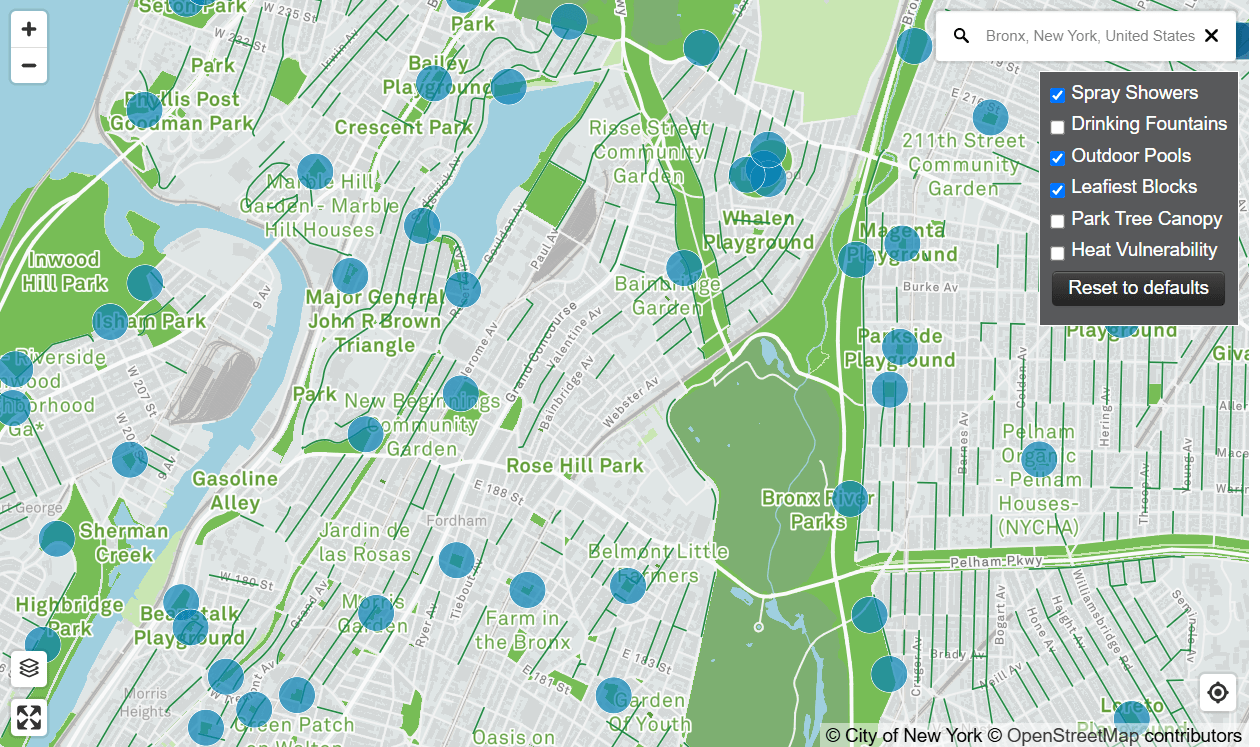
Photo Source: NYC Parks
As reported, the 25th season of Hoops in the Sun” is taking place at Orchard Beach from June 21-22. To help residents escape the heat, select Westchester County pools and beaches will open for the season beginning Monday, June 23. Glen Island Beach in New Rochelle, Playland Beach in Rye, Saxon Woods Pool in White Plains, Sprain Ridge Pool in Yonkers and Willson’s Wave Pool in Mt. Vernon will open daily beginning Monday, June 23, through Labor Day, Sept. 1 from 11 a.m. to 6:30 p.m.; last entry at 6 p.m.; weather permitting.
Admission fees apply; parking fees apply at Glen Island and Playland; proof of Westchester County residency is required at Saxon, Sprain and Willson’s pools as well as Glen Island Beach.
Read more on the city’s summer heat plan that includes key resources to beat the heat, additional health and safety tips during extreme heat, warning signs of heat illness, how to work and prepare for outdoor activities during extreme heat, how to keep pets safe, and more. Follow NYCEM’s 2025 “Beat the Heat” for tips on how to keep cool and safe during this heatwave.
ADDITIONAL HEALTH AND SAFETY TIPS FOR PROTECTION AGAINST THE HEAT
- Go to an air-conditioned location, even if for a few hours.
- Stay out of the sun and avoid extreme temperature changes.
- Avoid strenuous activity, especially during the sun’s peak hours: 11 a.m. to 4 p.m. If you must do strenuous activity, do it during the coolest part of the day, which is usually in the morning between 4 a.m. and 7 a.m.
- Remember: drink water, rest, and locate shade if you are working outdoors or if your work is strenuous. Drink water every 15 minutes even if you are not thirsty, rest in the shade, and watch out for others on your team. Your employer is required to provide water, rest, and shade when work is being done during extreme heat.
- Wear lightweight, light-colored clothing when inside without air conditioning or outside.
- Drink fluids, particularly water, even if you do not feel thirsty. Your body needs water to keep cool. Those on fluid-restricted diets or taking diuretics should first speak with their doctor, pharmacist, or other health care provider. Avoid beverages containing alcohol or caffeine.
- Eat small, frequent meals.
- Cool down with a cool bath or shower.
- Participate in activities that will keep you cool, such as going to the movies, walking in an air-conditioned mall, or swimming at a pool or beach.
- Make sure doors and windows have tight-fitting screens and, in apartments where children live, and window guards. Air conditioners in buildings more than six stories must be installed with brackets so they are secured and do not fall on someone below. Window guards can prevent children from falling out of a window and suffering serious injuries or even death. Screens keep mosquitoes that can spread West Nile Virus out of your home and keep cats from falling out of windows.
- Never leave your children or pets in a vehicle, even for a few minutes.
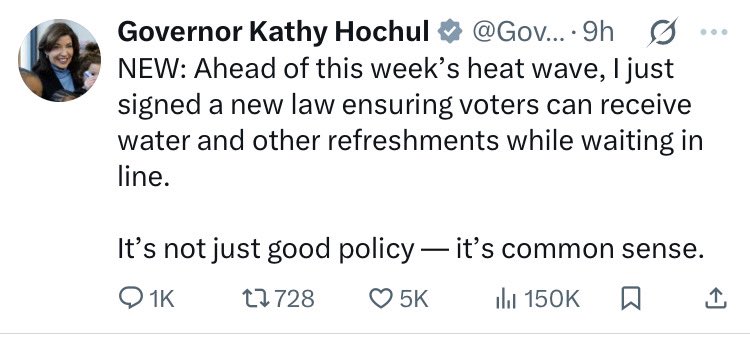
Source: Gov. Kathy Hochul via X
KNOW THE WARNING SIGNS OF HEAT ILLNESS
Call 911 immediately if you or someone you know has:
- hot dry skin.
- trouble breathing.
- rapid heartbeat.
- confusion, disorientation, or dizziness.
- nausea and vomiting.
If you or someone you know feels weak or faint, go to a cool place and drink water. If there is no improvement, call a doctor or 911.
KEEPING YOUR PETS SAFE
- Avoid dehydration: Pets can dehydrate quickly, so give them plenty of fresh, clean water.
- Walk your dog in the morning and evening: When the temperature is very high, do not let your dog linger on hot asphalt. Your pet’s body can heat up quickly, and sensitive paw pads can burn.
- Know when your pet is in danger: Symptoms of overheating in pets include excessive panting or difficulty breathing, increased heart and respiratory rate, drooling, mild weakness, unresponsiveness, or even collapse.
- Test the temperature of the pavement with the palm of your hand before taking your pets for a walk to ensure it will not burn their paws. If it’s too hot for your hand, it’s too hot for their paws.
IMPROPER FIRE HYDRANT USE
The improper opening of fire hydrants wastes 1,000 gallons of water per minute, causes flooding on city streets, and lowers water pressure to dangerous levels, which hamper the ability of the Fire Department to fight fires safely and quickly.
Use “spray caps” to reduce hydrant output to a safe 25 gallons per minute while still providing relief from the heat. To obtain a spray cap, an adult 18 years or older with proper identification can go to his or her local firehouse and request one.
ENERGY-SAVING TIPS
During periods of intense electrical usage, such as on hot, humid days, it is important to conserve energy as much as possible to avoid brownouts and other electrical disruptions. While diminishing your power usage may seem inconvenient, your cooperation will help to ensure that utility providers are able to provide uninterrupted electrical service to you and your neighbors, particularly those who use electric powered medical equipment or are at risk of heat-related illness and death.
- Set your air conditioner to 78°F or “low.”
- Run appliances such as ovens, washing machines, dryers and dishwashers in the early morning or late at night when it is cooler outside to reduce heat and moisture in your home.
- Close doors to keep cool air in and hot air out when the air conditioner is running.
- Keep shades, blinds, and curtains closed. About 40 percent of unwanted heat comes through windows.
- Turn off air conditioners, lights, and other appliances when not at home, and use a timer or smart technology to turn on your air conditioner about a half-hour before arriving home. Keep air conditioner filters clean.
- If you run a business, keep your door closed while the air conditioner is running.
- Tell your utility provider if you or someone you know depend on medical equipment that requires electricity.
For more information, visit NYC.gov/beattheheat. New Yorkers are encouraged to sign up for Notify NYC, the City’s free emergency communications program. To sign up for Notify NYC, download the free mobile application, visit NYC.gov/NotifyNYC, call 311, or follow @NotifyNYC on Twitter.

admin
Welcome to the Norwood News, a bi-weekly community newspaper that primarily serves the northwest Bronx communities of Norwood, Bedford Park, Fordham and University Heights. Through our Breaking Bronx blog, we focus on news and information for those neighborhoods, but aim to cover as much Bronx-related news as possible. Founded in 1988 by Mosholu Preservation Corporation, a not-for-profit affiliate of Montefiore Medical Center, the Norwood News began as a monthly and grew to a bi-weekly in 1994. In September 2003 the paper expanded to cover University Heights and now covers all the neighborhoods of Community District 7. The Norwood News exists to foster communication among citizens and organizations and to be a tool for neighborhood development efforts. The Norwood News runs the Bronx Youth Journalism Heard, a journalism training program for Bronx high school students. As you navigate this website, please let us know if you discover any glitches or if you have any suggestions. We’d love to hear from you. You can send e-mails to norwoodnews@norwoodnews.org or call us anytime (718) 324-4998.