



Joyce Crawford was shocked and upset upon hearing the news that her 4-year-old granddaughter’s city-funded daycare center would no longer offer kindergarten.
“What do you mean no kindergarten!” she said. “Give me a break!”
That sentiment is shared by parents across the city as the Administration for Children’s Services (ACS), which funds one of the largest subsidized daycare systems in the country, closes kindergarten classrooms and cuts funding for pre-K in an effort to close a $62 million budget gap.
For 30 years, ACS-funded centers have offered childcare for low-income children, including pre-kindergartners and kindergartners. Starting this fall, ACS centers will no longer serve 5-year-olds. Parents will be forced to place their children in public schools instead.
Parents, centers and public school principals say the cuts will add more children to already overcrowded schools, cause layoffs for daycare workers, and create obstacles for working parents who rely on the centers’ extended hours, all while reducing capacity in a daycare system that, advocates estimate, only serves a third of the families that need it.
The cuts will hit harder in other parts of the city, like Queens and Brooklyn, where more kindergartners attend ACS-funded centers. Just a handful of north Bronx centers will lose their kindergartens.
But daycare workers and guardians like Crawford say the Bronx centers on the chopping block are supportive communities rooted in the neighborhood, the loss of which can’t be measured in classroom seats.
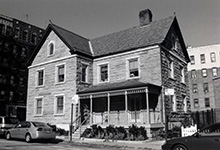
Joyce James, director of the Susan E. Wagner Day Care Center in Baychester, will lose two kindergarten classrooms. James is scrambling to keep her center afloat, but may have to lay off six classroom staffers, plus bookkeepers, cooks and janitors. She has worked at the center since 1975, and has teachers in her classrooms whom she saw graduate from kindergarten. “I’d love to keep my kindergarten,” she said.
“The daycare is like a family,” said Linda Cowans, a teacher for 17 years at the Williamsbridge NAACP daycare center on East 219th Street. Cowans may lose her job when the center loses its kindergarten next year. Cowans said centers offer support that schools cannot, like more teachers, smaller class sizes and more flexible hours.
“Everyone’s schedule is not the same as the public schools’,” said Anita Howell, director of the Crawford Community Day Care Center in Williamsbridge, which will lose its kindergarten next year.
Howell’s center is open from 7:30 a.m. to 6 p.m. At closing time, Howell accommodates parents who are running late. “They won’t be able to do this at the public schools,” she said.
ACS funding cuts are also being felt where the agency’s money is mixed together with other funding sources.
ACS has proposed cutting up to $104,000 from the Belmont Community Day Care Center, which has operated for 38 years, pulling money from a program that combines funding from ACS and the Department of Education to provide some pre-K curriculum in its classrooms.
Don Bluestone, executive director of Mosholu Montefiore Community Center in Norwood, which runs daycare and pre-K programs throughout the Bronx, doesn’t know how much funding he’ll lose from ACS because funding from several sources is all mixed together, allowing the center to allocate money based on needs. Bluestone says that flexibility will be lost.
“The problem with Bloomberg’s business model,” Bluestone said, “is that it’s non-flexible.”
ACS spokesperson Sharman Stein said there is simply no money to maintain current funding levels. State and federal governments have been “backing away from childcare” for years, Stein said, leaving the city to fill a gap it can longer afford to fill.
Nancy Kolben of Child Care Inc., a childcare advocacy nonprofit, said there are better ways to handle the cuts. “What the city is doing represents a 19 percent cut in capacity in publicly-funded centers, at a time when there is huge unmet demand [and] 40,000 kids on waiting lists,” Kolben said. Instead of adding children to overcrowded kindergarten classrooms, the city could use DOE money to fund classrooms in the centers. At the very least, centers should be allowed to “age-down,” Kolben said, replacing their 5-year-olds with younger students.
Charlene Harry’s twin daughters attend pre-K at Williamsbridge. A month after the kindergarten registration deadline, Harry had yet to register her daughters, meaning they will be at the back of the line when seats are determined.
“I’m just praying they don’t have to cut Williamsbridge,” Harry said.

admin
Welcome to the Norwood News, a bi-weekly community newspaper that primarily serves the northwest Bronx communities of Norwood, Bedford Park, Fordham and University Heights. Through our Breaking Bronx blog, we focus on news and information for those neighborhoods, but aim to cover as much Bronx-related news as possible. Founded in 1988 by Mosholu Preservation Corporation, a not-for-profit affiliate of Montefiore Medical Center, the Norwood News began as a monthly and grew to a bi-weekly in 1994. In September 2003 the paper expanded to cover University Heights and now covers all the neighborhoods of Community District 7. The Norwood News exists to foster communication among citizens and organizations and to be a tool for neighborhood development efforts. The Norwood News runs the Bronx Youth Journalism Heard, a journalism training program for Bronx high school students. As you navigate this website, please let us know if you discover any glitches or if you have any suggestions. We’d love to hear from you. You can send e-mails to norwoodnews@norwoodnews.org or call us anytime (718) 324-4998.